Subfloor preparation is the work that happens before any flooring goes down: testing for moisture, flattening high and low spots, fixing damage, and making sure the surface is clean, dry, and stable. In San Diego, two local factors drive most of the prep. Many homes sit on concrete slabs that hold moisture, and the coastal marine layer keeps indoor humidity higher than inland averages. Skip the prep and you get cupping, hollow spots, and gaps within a year.
Why prep matters more on the San Diego coast
A floor is only as flat and dry as the surface under it. That surface is the subfloor. Two things go wrong locally if it isn’t handled right.
First, moisture. A lot of San Diego County housing is slab-on-grade, meaning the home sits directly on a concrete pad with no crawlspace. Concrete holds and releases moisture for years, and a slab that reads dry in October can read wet after a wet-season storm cycle. Lay hardwood or laminate over a damp slab and the boards swell from below.
Second, humidity swing. Homes in Encinitas, La Jolla, Coronado, and Imperial Beach run higher ambient humidity than Escondido or Santee. The marine layer parks moisture in the air through May and June. That affects how wood flooring sits on the subfloor and why acclimation upstream is non-negotiable near the coast.
Good prep accounts for both. It’s the difference between a floor that lasts 20 years and one that fails its first summer.
The four steps of subfloor preparation
Every solid install follows the same order. Rush any step and the next one can’t do its job.
- Test. Moisture, flatness, and soundness, in that order.
- Repair. Fix damage, squeaks, soft spots, and cracks.
- Level. Grind down highs, fill lows, hit the flatness spec.
- Prep the surface. Clean, prime, and add a moisture barrier when needed.
Step 1: testing
On a concrete slab, the calcium chloride test or an in-situ relative humidity probe tells you how much moisture the slab is giving off. Most manufacturers cap installs at 75 to 80 percent in-situ RH, or around 3 pounds per 1,000 square feet over 24 hours. A coastal slab can fail this in spring even when it passed in fall.
On a wood subfloor, a pin meter reads moisture content. The subfloor and the new wood flooring should be within 2 to 4 percent of each other before a single board goes down.
Flatness gets checked with a straightedge or laser. The common spec is 3/16 inch of variation over a 10-foot span. Older San Diego homes from the 50s through 70s often miss this by a wide margin.
Step 2: repair
This is where soft spots, water damage, and squeaks get addressed. Squeaks usually mean loose fasteners or movement against the subfloor, and they get fixed by re-securing, not by covering them up. If a slab has cracks wider than a credit card or active moisture intrusion, that gets sorted before anything else. Skipping it is the most common reason a floor fails early. If you’re already seeing movement or noise, our guide on the signs you need floor repair in San Diego walks through what’s fixable.
Step 3: leveling
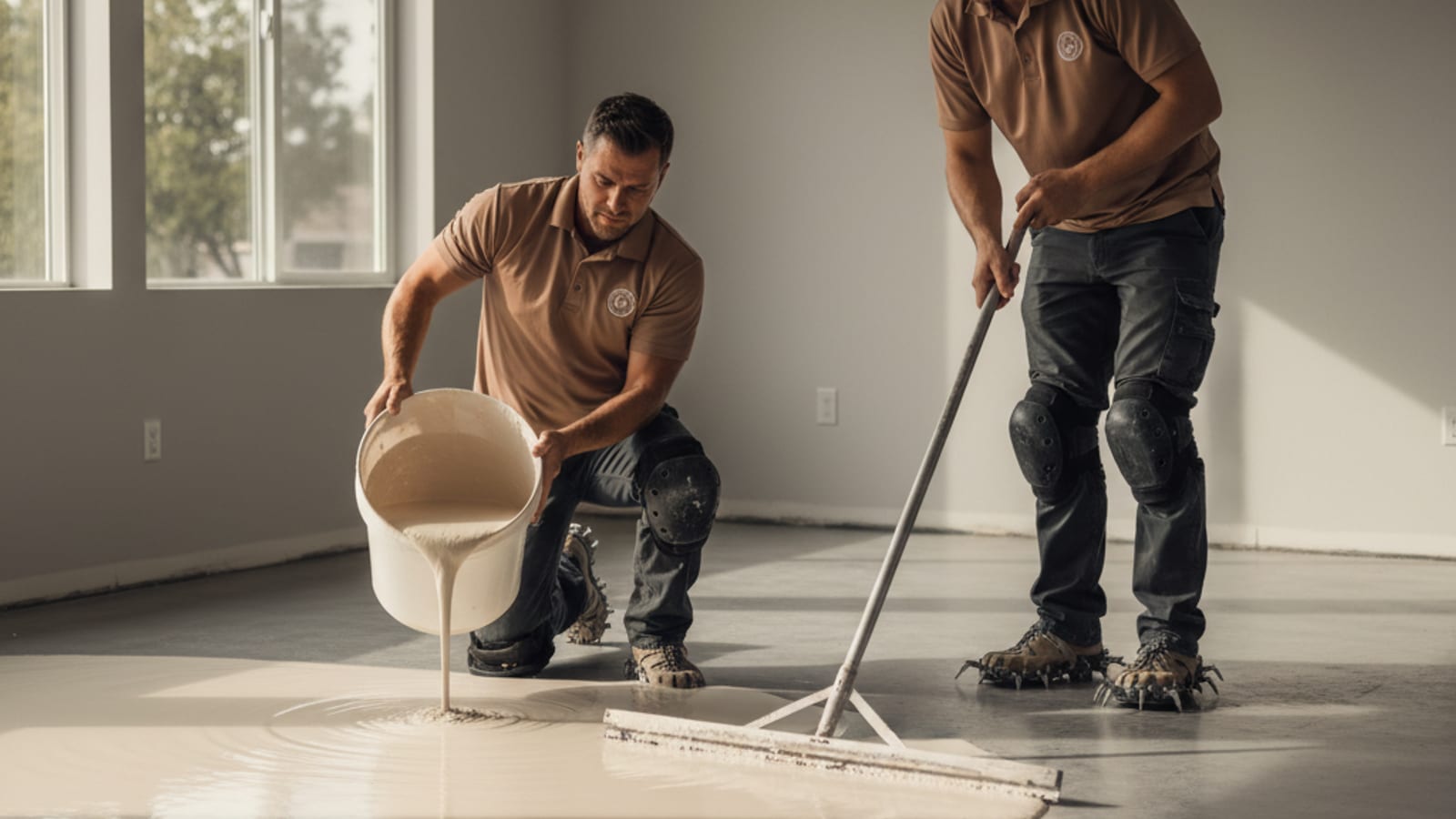
A floor that isn’t flat telegraphs every dip through the finished surface, and it voids most flooring warranties. Leveling means grinding down high spots and filling low ones with self-leveling compound, a pourable mix that flows out flat and cures hard. Slabs need leveling more often than people expect, especially in homes with foundation settling.
Step 4: surface prep and moisture barrier
The clean, primed surface comes last. On a coastal slab, this is where a moisture barrier earns its keep. A poured epoxy moisture barrier or a sheet membrane sits between the slab and the flooring and stops vapor from reaching the boards. For a slab near the water that tests borderline on moisture, this step is what makes a hardwood or laminate install safe instead of a gamble.
Acclimation: the coastal step people skip
For solid and engineered hardwood, the wood has to acclimate before install. Boards get delivered, opened, and cross-stacked in the actual room for several days so they reach the home’s real humidity. Inland, 3 to 5 days is typical. Near the coast, plan on 8 to 10 because the ambient humidity is higher and the wood needs longer to settle.
This step happens on top of subfloor prep, not instead of it. A perfectly prepped slab still cups if you nail down boards that haven’t acclimated. We cover the full process in acclimating hardwood in coastal San Diego, and the broader picture of how the marine layer affects every product in coastal humidity and flooring.
What subfloor prep costs in San Diego
Prep is usually priced separately from the flooring itself because it varies so much by condition. Here’s what to expect locally in 2026.
| Prep task | Typical San Diego cost | Notes |
|---|---|---|
| Moisture testing (slab) | $75–$250 | Per slab area; in-situ RH probes cost more than surface tests |
| Self-leveling compound | $1.50–$5.00 per sq ft | Depends on how deep the low spots run |
| Grinding high spots | $1.00–$3.00 per sq ft | Common on older slabs |
| Subfloor repair (wood) | $300–$1,200 | Soft spots, squeak fixes, sister joists |
| Slab crack repair | $200–$800 | Cosmetic vs. structural changes the price |
| Epoxy moisture barrier | $1.50–$4.00 per sq ft | Often required on coastal slabs |
| Plywood underlayment | $1.50–$3.50 per sq ft | When a new wood subfloor is needed |
A typical 800-square-foot job near the coast that needs light leveling and a moisture barrier often lands in the $2,000 to $4,000 range for prep alone. A dry, flat inland slab might need almost nothing. The only way to know is to test, which is why we include moisture and flatness checks in every free in-home estimate.
How prep changes by flooring type
Not every floor needs the same prep. The product decides the spec.
Hardwood and engineered hardwood are the most demanding. They need the tightest moisture readings, full acclimation, and a moisture barrier over any slab that isn’t bone dry. On slab homes, engineered usually beats solid because it tolerates moisture swing better.
Luxury vinyl plank is forgiving on moisture but unforgiving on flatness. LVP is thin, so it shows every bump and dip in the subfloor. Leveling matters more than moisture here, though a coastal slab still gets a vapor check.
Tile needs a rigid, flat, crack-isolated base. On a slab with cracks, an uncoupling membrane goes down first so slab movement doesn’t telegraph into cracked grout lines.
Laminate sits between LVP and hardwood. It needs flatness and a moisture barrier, plus a short acclimation, because its core swells if it gets wet from below.
Frequently asked questions
Why is subfloor preparation important?
Because the subfloor controls how flat, dry, and stable the finished floor is. Bad prep causes cupping, hollow spots, squeaks, and gaps, and it voids most flooring warranties. In San Diego, slab moisture and coastal humidity make prep the single biggest factor in whether a floor lasts.
Do I need a moisture barrier on a San Diego slab?
Often, yes, especially near the coast. A slab that tests above the manufacturer’s moisture limit needs a barrier before wood or laminate goes down. We test first, then decide. A dry inland slab may not need one at all.
How long does subfloor prep take?
For a clean slab, a day or less. For one needing leveling, repair, and a moisture barrier, two to four days, plus cure time for the compound and barrier. Hardwood acclimation runs on top of that, 8 to 10 days near the coast.
Can I install flooring over an uneven subfloor?
No, not without leveling it first. An uneven subfloor shows through the finished floor, causes premature wear, and voids warranties. Self-leveling compound or grinding brings it within spec before any flooring goes down.
Is my San Diego slab too wet for hardwood?
It might be, but a moisture test answers it. Coastal slabs that pass in fall sometimes fail in spring. If a slab tests too wet, engineered hardwood with a moisture barrier is usually the safe path instead of solid wood.
Get your subfloor checked before you buy flooring
Most flooring problems in San Diego trace back to skipped prep. We test moisture and flatness on every job and give you an upfront quote before any work starts, with no surprise add-ons later. We cover all of San Diego County and know how slab homes and the coastal marine layer change the prep your floor actually needs. Call us at (858) 925-5546 for a free in-home estimate.