Common questions. Straight answers.
Most of what homeowners ask before they hire us. Don't see your question? Call us at the number in the header.
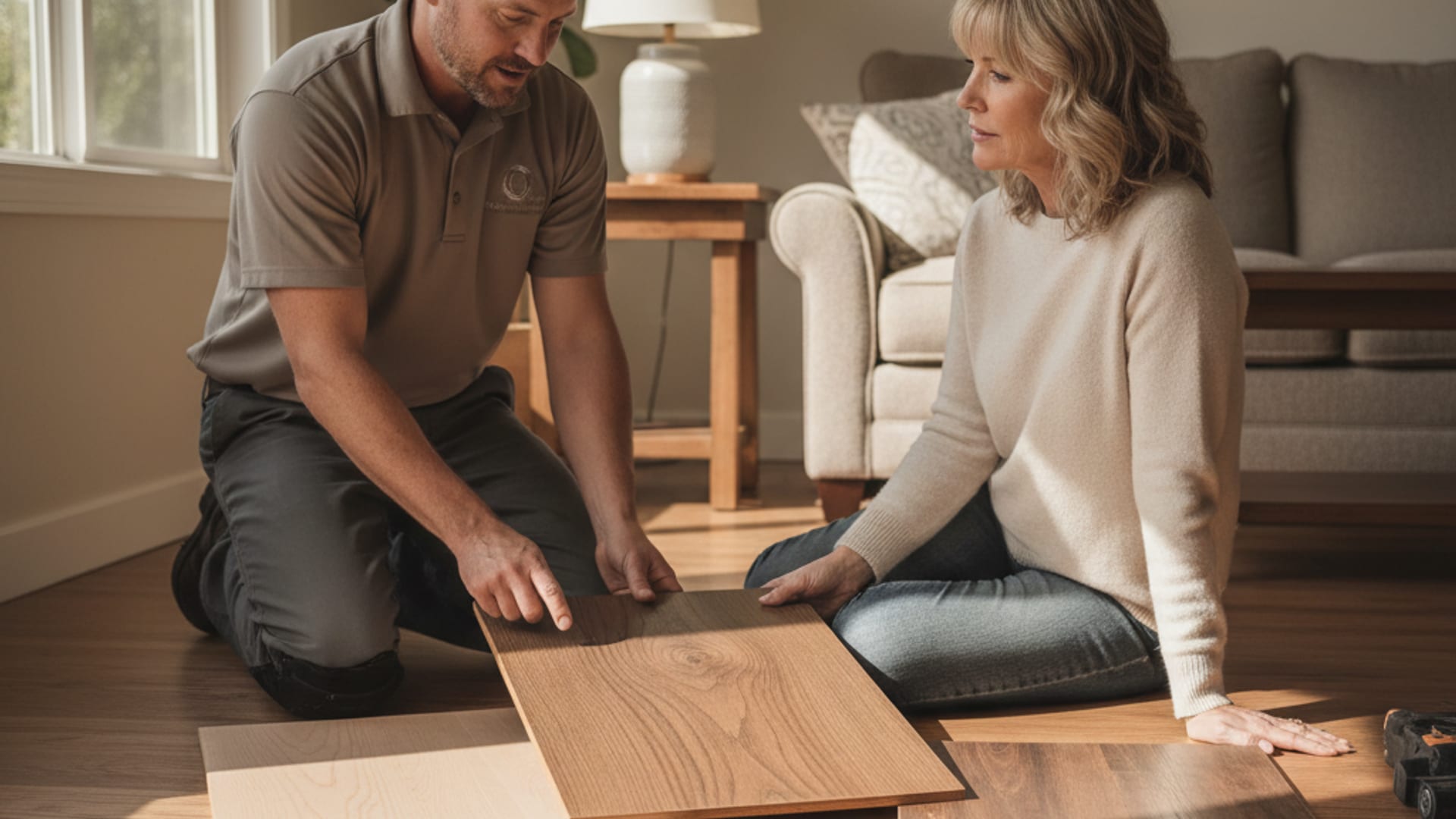
What does flooring installation cost and how does it work?
How much does flooring cost in San Diego?
It depends on product. LVP runs $5–$9 per sq ft installed. Engineered hardwood is $8–$14. Solid hardwood is $9–$16. Tile (porcelain or ceramic) is $11–$20 depending on size and pattern. Laminate is $4–$7. Demo, subfloor prep, and transitions are line-itemed separately so you can see the full picture.
How fast can you start a job?
Most jobs start within 1–2 weeks of the in-home consult. Hardwood needs 5–10 days of on-site acclimation before install, the install date sits at the end of that window. We do not pressure you to commit on the spot; quotes stay valid 30 days.
What products do you carry?
Brand-neutral. We carry samples from manufacturers across the price range, Coretec, Mohawk, Shaw, Karndean, Anderson Tuftex, Hallmark, Mannington, Tarkett, Forbo, Daltile, MSI, and others. We recommend based on your subfloor, traffic, and budget, not on which one we get the deepest discount on.
When does a refinish make more sense than a replacement?
If your hardwood is solid 3/4-inch and not water-damaged or chemically stained beyond saving, refinishing usually wins. Refinishing costs roughly a third of replacement and gives you a brand-new surface in 3–5 days. We measure existing wear-layer thickness before recommending.
How much does a new floor cost?
How much does LVP cost installed?
Mid-grade rigid-core LVP runs $5–$7 per sq ft installed. Premium thicker SPC with attached cork or rubber pad runs $7–$9. Slab grinding or self-leveling adds $1–$2 per sq ft if your slab is out of flatness spec.
How much does hardwood cost installed?
Mid-grade solid white oak runs $9–$12 per sq ft installed including acclimation, demo, subfloor prep, install, and basic transitions. Wider planks (6 inches+), exotic species, and pre-finished European oak push pricing to $14–$20 per sq ft.
How much does tile cost installed?
Standard 12x24 porcelain in a kitchen runs $11–$15 per sq ft installed. Large-format (24x48 and up) runs $15–$20. Patterns like herringbone or chevron add labor cost. Cement board, Schluter Ditra, or self-leveling are line-itemed separately when needed.
How long does an install take?
Most LVP installs are 1–3 days. Hardwood is 2–4 days plus 5–10 days of acclimation upstream. Tile runs 3–7 days depending on pattern and prep. We confirm the schedule before booking and call before we arrive.
Do I need to be home during the install?
Not for most of it. We need access at the start and the finish, and we coordinate furniture moves with you. For hardwood refinishing, plan to stay off the floor for 24–48 hours during cure, most clients move out for a couple of nights or use other parts of the house.
How often should hardwood be refinished?
How often should hardwood be refinished?
Most San Diego hardwood floors do well with a recoat (no full sand) every 7–10 years and a full refinish every 15–25 years depending on traffic and care. Pet households and beach houses with sand tracking in tend to need recoating more often.
How many times can a floor be refinished?
Solid 3/4-inch hardwood: typically 5 to 8 times over its life. Engineered with a 3mm or thicker wear layer: usually once or twice. Engineered with a 1mm or 2mm wear layer should be replaced rather than refinished. We measure existing wear-layer thickness before quoting.
What finish do you use?
We default to Bona Traffic HD waterborne polyurethane, toughest abrasion rating in the category, low-VOC, fast-dry. Oil-based polyurethane and hardwax oil are options if you want a different look or feel. We bring sample boards finished in each so you can choose.
Should I install LVP, hardwood, or tile in my San Diego home?
Will hardwood work over a concrete slab?
Solid hardwood directly over slab is not recommended in San Diego because of moisture transmission. The standard solution is plywood subfloor over the slab first, then hardwood nailed to the plywood. The cleaner option for most slab homes is engineered hardwood, which can be glued or floated directly.
When does LVP make more sense than hardwood?
Slab-on-grade homes, pet households, kids and high-traffic spaces, rentals, basements, and budget-conscious upgrades. Modern rigid-core LVP looks convincing, is genuinely waterproof at the plank, and costs roughly half what real hardwood does. For most San Diego homes, LVP is the right answer.
When does tile make sense?
Bathrooms, kitchens, mudrooms, laundry rooms, and entryways, anywhere moisture is a real concern. Large-format porcelain (24x48 and up) is the dominant trend for new builds. Heated tile in primary bathrooms is a small-but-noticeable upgrade.
What about water damage and emergency floor work?
My floor was damaged by a leak. What do I do?
First, dry the floor and the subfloor, get fans on it within 48 hours if possible. Then call us. We assess whether boards can be saved (cupping sometimes flattens) or need replacement. We coordinate with restoration companies and insurance adjusters as needed.
How fast can you start emergency floor repair?
Same-week starts in most cases. Water-damaged floors that are still wet need to dry first, sometimes that takes a week with fans and dehumidifiers. We come out and assess immediately so you have a path forward.
Will my insurance cover floor replacement?
Often yes for sudden-and-accidental water damage (burst pipe, dishwasher leak, washing machine overflow). We provide a written scope and itemized estimate suitable for adjuster review. Wear-and-tear and mold from chronic leaks usually are not covered.
Ready for a flooring contractor who measures before quoting?
Free in-home measure with real product samples. Written quote, valid 30 days.