Your San Diego home’s floors endure daily wear, but signs of damage shouldn’t be ignored. Recognizing these cues early prevents small issues from becoming major, costly problems. Prompt professional attention maintains your home’s value and avoids safety hazards. Especially in San Diego’s fluctuating climate, understanding common floor damage signs and why expert repair is crucial can save you significant stress and expense.
Why early detection matters for your San Diego floors
Addressing floor damage quickly isn’t just about aesthetics; it’s about preserving your home’s integrity. Minor issues, if left unchecked, can lead to costly repairs, subfloor damage, and even safety risks. For San Diego homeowners, where humidity levels can shift, certain types of flooring, especially hardwood, are particularly susceptible to changes that manifest as visible damage. Knowing what these signs mean and why professional help is vital saves you time, money, and worry.
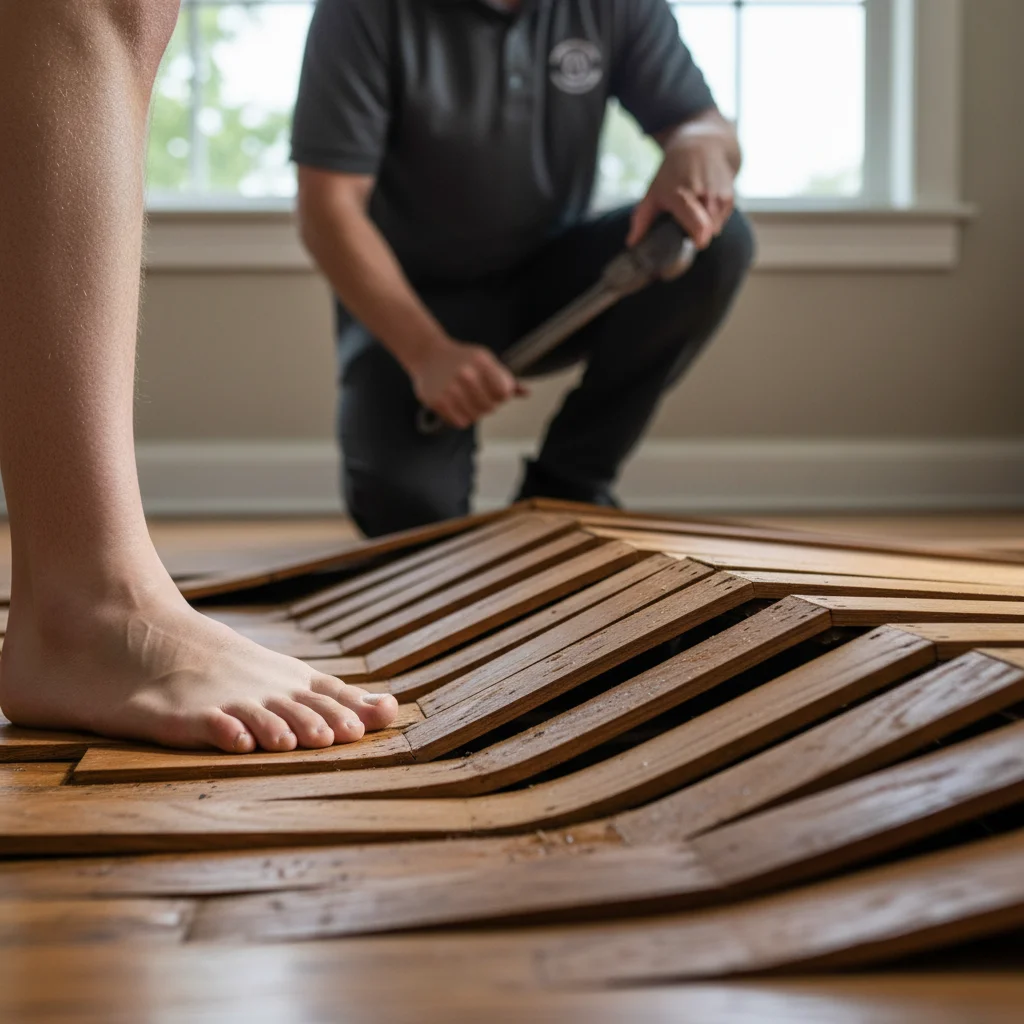
Sign 1: buckling or warping floorboards
One of the most noticeable and concerning signs of floor damage is when your floorboards start to buckle, cup, or warp. Buckling means planks lift from the subfloor, creating humps. Cupping shows boards higher on the edges, while warping describes general twisting or bending. These issues appear most often in hardwood and engineered hardwood.
Common cause: The main reason for buckling or warping is moisture. High humidity, a hidden leak beneath the floor, or even foundation issues allowing groundwater can cause wood to absorb moisture, swell, and change shape. Conversely, extreme dryness can make wood shrink and warp, though swelling is more common in San Diego’s coastal environment. Incorrect installation, where boards didn’t acclimate to the home’s environment, also contributes.
Why a professional repair is needed: Buckled or warped floors aren’t just unsightly; they’re a tripping hazard and often point to a significant moisture problem requiring immediate investigation. A professional flooring technician in San Diego can accurately diagnose the moisture source, whether it’s a hidden leak or improper subfloor preparation. They have the tools and expertise to carefully remove damaged planks, mitigate the moisture, and then either re-install salvageable boards or replace them with new, properly acclimated materials. DIY fixes without addressing the underlying moisture will only lead to recurring problems. Our team specializes in precise floor repair that tackles both the symptom and the cause.
Sign 2: deep scratches or gouges you can’t ignore
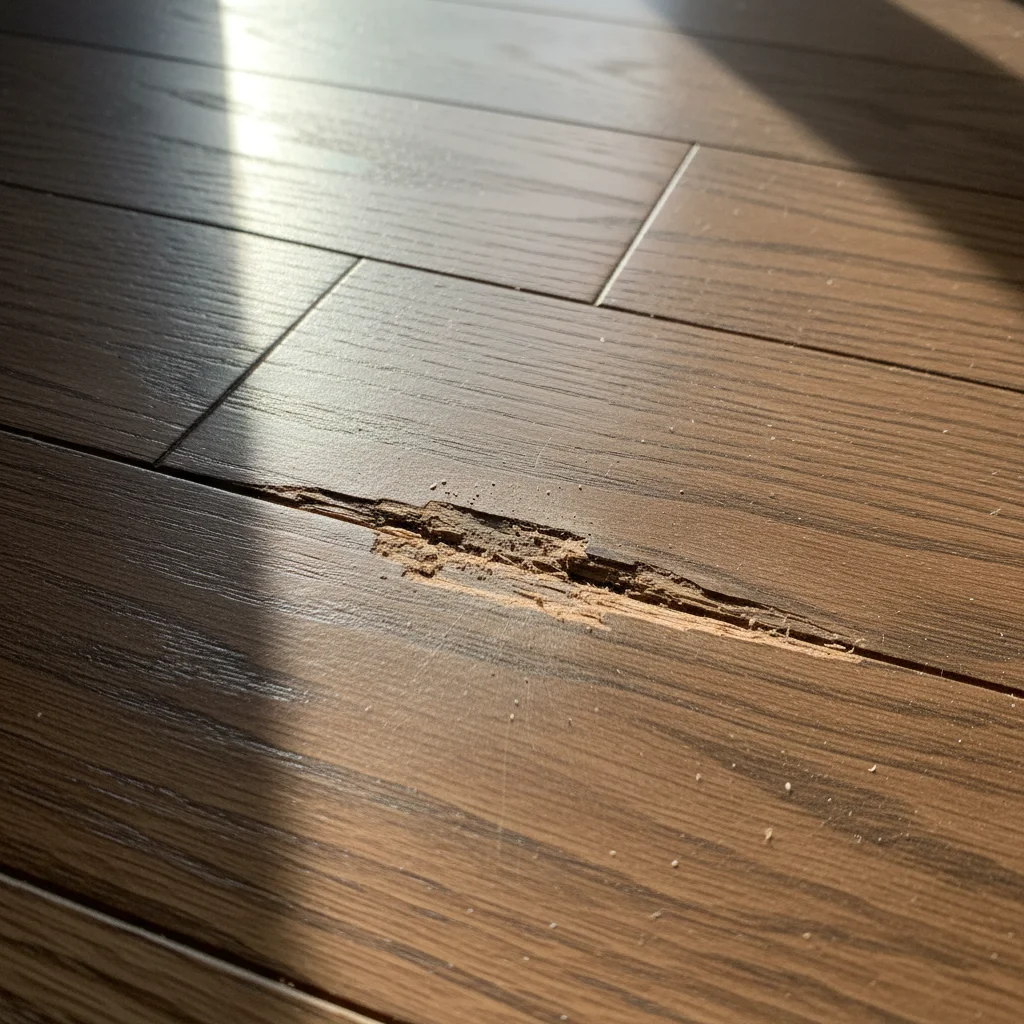
Every floor gets its share of minor scuffs. These are normal and sometimes buff out. However, when scratches cut deep into the wood finish, exposing raw wood, or when you find significant gouges from dropped objects or dragged furniture, professional help is needed. This kind of damage isn’t just cosmetic; it compromises your flooring’s protective layer.
Common cause: Deep scratches and gouges usually result from heavy impact, sharp objects, or abrasive materials dragged across the floor. Moving heavy appliances without protection, pets with untrimmed claws, or small pieces of gravel tracked in can cause considerable damage. Over time, even careful homeowners in San Diego might see these deeper marks accumulate, especially in high-traffic areas like entryways and living rooms.
Why a professional repair is needed: Deep scratches and gouges leave your subfloor vulnerable to moisture penetration and further damage. A professional assesses the extent. For extensive areas, they might recommend a complete floor refinishing to sand the surface and apply a new protective coat. For isolated gouges, individual plank replacement might be a targeted solution. This is especially true for engineered hardwood or laminate, where the top layer is thin. Professionals have the right tools and techniques to blend repairs seamlessly, matching the existing finish and preventing future problems. They also advise on preventative measures to keep your floors looking great longer.
Sign 3: water damage stains or soft spots
Water is the enemy of most flooring, especially wood-based options. Dark, discolored stains on your floors, particularly along seams or in corners, signal water damage. For LVP or tile, water damage appears as lifting edges, loose tiles, or discolored grout. More concerning are soft spots underfoot. If an area feels spongy or gives way when you step on it, it indicates significant subfloor water damage.
Common cause: Water damage often stems from persistent leaks, a dripping dishwasher, a seeping refrigerator line, an overflowing toilet, or poor window sealing. In San Diego, plumbing issues, particularly in older homes, are a common source. Once water penetrates the surface, it quickly degrades the subfloor, leading to rot and mold. Even high humidity can contribute over time if ventilation is inadequate.
Why a professional repair is needed: Water damage is one of the most serious floor issues. It can lead to mold, structural damage, and poor indoor air quality. Professionals don’t just fix visible damage; they identify and rectify the water intrusion source first. They remove affected flooring and subfloor materials, thoroughly dry the area, treat for mold if needed, then perform subfloor preparation before new installation. This comprehensive approach ensures the problem is resolved permanently, keeping your home healthy and safe. Checking with the California Contractors State License Board (CSLB) for licensed professionals ensures you hire someone qualified to handle critical repairs.
Sign 4: squeaky floors that won’t stop
A random creak might be charming in an old house, but widespread or persistent squeaking throughout your floors signals an issue. It’s more than just an annoyance; incessant squeaks indicate movement, friction, and potential structural problems within your flooring system.
Common cause: Squeaky floors typically occur when floorboards rub against each other, the subfloor, or their fasteners. This friction happens due to loose fasteners, humidity changes causing wood to expand and contract, or an uneven subfloor. Constant shifting wears down connections, increasing noise. In San Diego’s climate, seasonal changes can cause wood to move, making these issues worse.
Why a professional repair is needed: While some DIY fixes exist for minor squeaks, they often only mask the symptom. A professional can identify the precise source, which might require accessing the subfloor from below or carefully lifting sections of flooring from above. They re-secure loose planks, add shims, or use specialized fasteners to eliminate movement and noise. This targeted approach is far more effective and durable than superficial fixes. Persistent squeaks can also be an early indicator of issues with your hardwood flooring installation or overall floor health.
Sign 5: gaps opening between planks
If you notice increasing spaces between your hardwood, laminate planks, or even tiles, it means your flooring materials are shrinking or shifting. While small gaps can develop naturally with age and seasonal changes, significant or rapidly appearing gaps are a red flag.
Common cause: The most common reason for gaps is changes in humidity and temperature. Wood and wood-based products expand when absorbing moisture and contract when drying out. In San Diego, fluctuating humidity, especially moving from dry to humid periods, causes this movement. Extreme dryness can make planks shrink, leaving visible gaps. Poor installation, where materials weren’t properly acclimated or installed too tightly, also contributes.
Why a professional repair is needed: Large gaps don’t just look bad; they can trap dirt, debris, and moisture, making floors harder to clean and potentially leading to further damage or pest issues. Professional repair might involve carefully disassembling and re-laying sections of the floor to close gaps, or strategically inserting wood filler and color-matched materials. For significant shrinkage, individual planks may need replacement. A professional understands how different flooring types react to environmental conditions and recommends the most effective, long-lasting solution, restoring your floors’ integrity and appearance.
Can these problems be repaired or do I need a replacement?
This is a common question for many San Diego homeowners facing floor damage. The good news is that many issues described above, especially if caught early, are excellent candidates for professional floor repair. Buckling, deep scratches, water stains, and even significant gaps can often be fixed by skilled technicians without needing a full replacement. Repairing sections is usually less invasive, faster, and more cost-effective than a full tear-out and new installation.
However, there are situations where replacement becomes the more sensible option. If the damage is extremely widespread, affecting a large percentage of the floor, or if the subfloor has suffered extensive, irreparable damage from prolonged moisture or structural issues, a full replacement might be recommended. Also, if the existing flooring is simply at the end of its lifespan or you’re looking for a significant aesthetic update, a new installation is the way to go. A reputable flooring company provides an honest assessment, explaining your options and recommending the best course of action for your specific situation and budget.
When to call us
Don’t let minor floor damage turn into a major headache for your San Diego home. Persistent issues like buckling, significant water stains, or widespread squeaking require the expertise of an experienced flooring crew. We have the tools, knowledge, and experience to accurately diagnose problems and perform durable, aesthetically pleasing repairs. Call us at (858) 925-5546 for a same-day estimate.