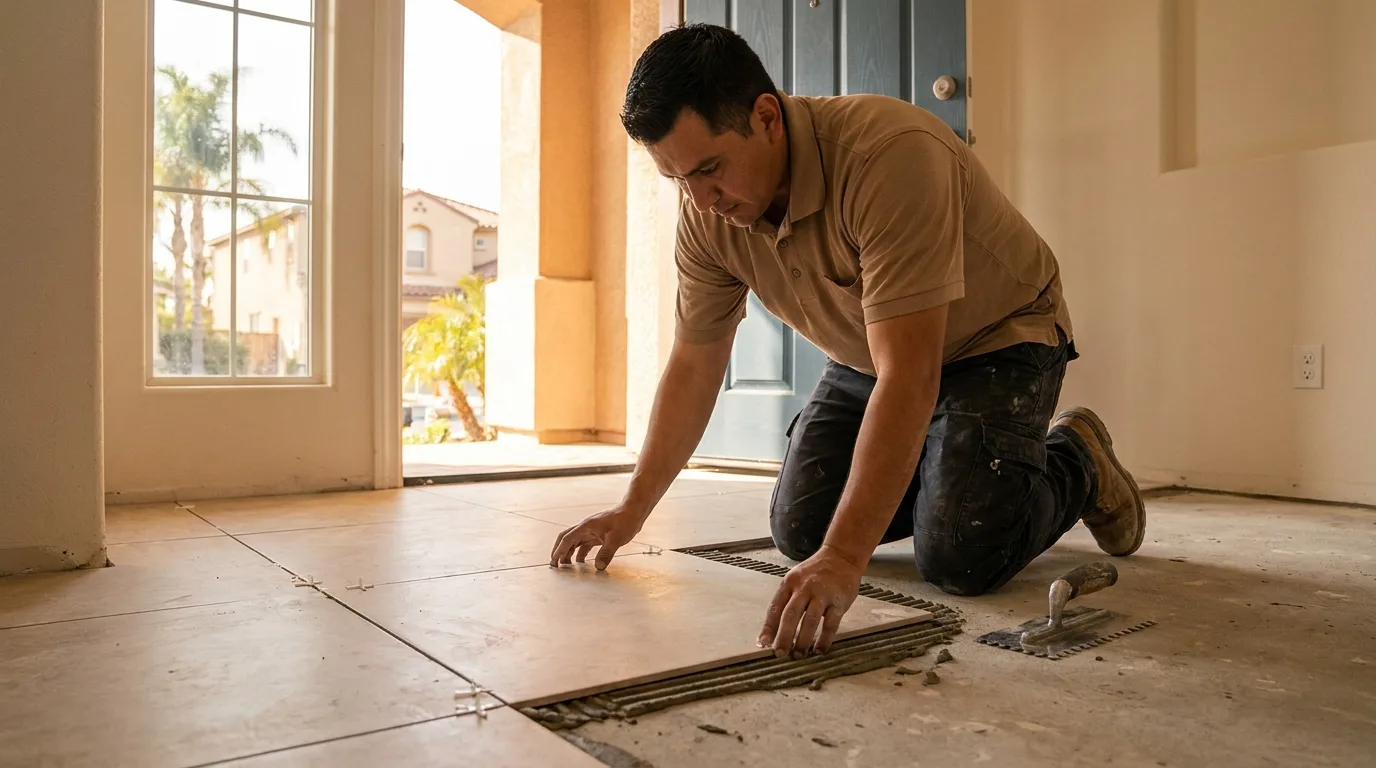
When San Diego homeowners ask us about porcelain vs ceramic tile san diego projects, the honest one-sentence answer is this: porcelain is denser, harder, and more water-resistant, while ceramic is cheaper and easier to cut. Both are fired clay products, but the differences in how they’re made matter a lot once you factor in coastal humidity, outdoor patios, and the way San Diego families actually use their homes.
Here’s everything you need to choose confidently.
The short version
- Porcelain absorbs less than 0.5% water; ceramic absorbs more, making porcelain the safer pick for bathrooms, showers, and outdoor use.
- Ceramic costs less per square foot on material, but installed costs in San Diego run $11–$20/sq ft for either type because labor is the bigger variable.
- Porcelain is harder and more chip-resistant in high-traffic areas; ceramic is easier to cut and better for walls or low-traffic spaces.
- For San Diego’s indoor-outdoor lifestyle, porcelain wins on patios and pool decks. Ceramic is fine for backsplashes and bedroom floors.
- Both need proper subfloor preparation to perform well long-term.
What’s the real difference between porcelain and ceramic?
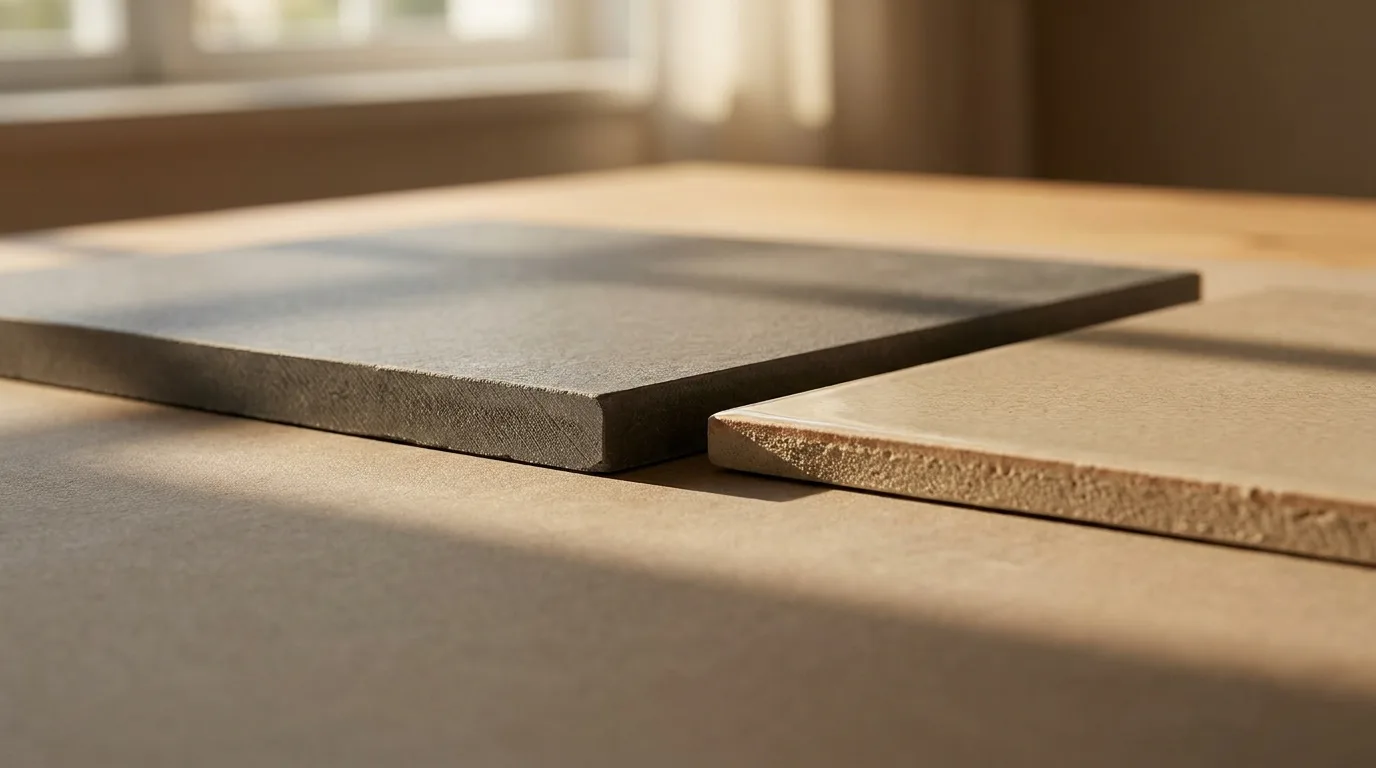
Porcelain is made from a finer, denser clay fired at higher temperatures, which is what drives its lower water absorption. Ceramic uses a coarser clay body and absorbs more moisture, which isn’t a problem in dry interior spaces but can cause cracking outdoors when temperatures swing.
The Tile Council of North America defines porcelain as tile with a water absorption rate of 0.5% or less. Ceramic typically falls in the 3–7% range. In San Diego’s coastal neighborhoods, that gap matters more than people expect, especially near the water in areas like La Jolla where morning marine layer keeps surfaces damp.
PEI wear rating: what it means for your floors
Both tile types carry a PEI (Porcelain Enamel Institute) rating from 0 to 5 that tells you how much foot traffic the surface can handle:
- PEI 0–1: Wall tile only
- PEI 2–3: Residential floors with light to moderate traffic
- PEI 4: Heavy residential and light commercial
- PEI 5: Industrial or very heavy commercial
For most San Diego homes, a PEI 3 or 4 is the sweet spot on floors. Porcelain tiles are more consistently available at PEI 4 and 5 because of their density. If you’re tiling a busy entryway or kitchen where grit from the beach tracks in daily, that rating matters.
Which tile is better for a San Diego bathroom?
For bathrooms, porcelain is the better choice, full stop. Its low water absorption means it won’t soak up moisture from showers or humidity, and it resists the mild mildew conditions that coastal bathrooms can develop.
Ceramic works fine on bathroom walls and in powder rooms that don’t see standing water, but we’d steer you away from ceramic on shower floors or around tub surrounds. The glaze on ceramic does provide some moisture protection, but the unglazed edges and grout joints are where problems start over time.
For our tile flooring installation projects in San Diego bathrooms, we almost always spec porcelain for the floor and either product for the walls depending on the client’s budget and look.
Is porcelain worth the extra cost?
Usually yes, but it depends on where it’s going. The material price difference is real: ceramic tile starts around $1–$3/sq ft for basic options, while comparable porcelain runs $3–$6/sq ft. Large-format or specialty porcelain can go much higher.
What most San Diego homeowners don’t realize is that the installed price often looks similar because labor is the bigger cost either way. Typical installed tile costs in San Diego run $11–$20/sq ft for both types once you add setting materials, grout, and labor. The gap narrows to a few hundred dollars on a standard bathroom project.
Where porcelain earns its premium:
- Outdoor patios and pool decks: Porcelain handles freeze-thaw cycles and UV exposure without absorbing moisture that would cause cracks. San Diego doesn’t get hard freezes, but wet-season temperature swings can still stress a porous tile over years.
- Kitchen floors: Daily spills, dropped utensils, and heavy foot traffic benefit from porcelain’s hardness.
- High-traffic entryways: Porcelain holds up to grit and wear where ceramic glaze can eventually erode.
Where ceramic saves money without sacrificing much:
- Backsplashes: No foot traffic, minimal moisture exposure, easy to cut for outlet cutouts.
- Bedroom floors: Low foot traffic, no standing water.
- Feature walls: Any dry interior vertical surface where budget is a priority.
What about cutting and installation?
This is where ceramic has a real practical advantage. Ceramic’s softer clay body cuts cleanly with a standard tile saw or even a snap cutter. Porcelain’s density requires a diamond-blade wet saw and more time per cut, especially on large-format tiles. Intricate cuts around toilets, drains, or irregular walls take longer with porcelain.
For a DIYer, ceramic is more forgiving. For a professional installer, the difference shows up in labor time, which feeds back into that installed cost range. We account for this when quoting projects so you’re not surprised.
One other factor: porcelain’s hardness can actually make it harder to achieve tight lippage (the slight height variation between tiles). Larger-format porcelain tiles require a flatter subfloor than ceramic to lay correctly. This is another reason we take subfloor preparation seriously before any tile job.
Indoor vs outdoor tile in San Diego
San Diego’s indoor-outdoor lifestyle is one of the main reasons tile is so popular here. Sliding doors open onto patios year-round, and homeowners want a consistent look from inside to outside.
For that application, porcelain is the right call. It’s rated for outdoor use, handles direct sun, and cleans up easily after outdoor entertaining. Choose a tile with a slightly textured surface finish (a “grip” or “matte” rating) rather than polished porcelain outdoors, since polished tile gets slippery when wet.
Ceramic is not recommended outdoors in any climate. Even in San Diego’s mild weather, a few years of morning dew absorption and sun exposure will cause ceramic to crack and the glaze to craze.
If you’re considering a different material entirely for outdoor spaces, luxury vinyl plank installation is another option some clients choose for covered patios, though it can’t match tile’s heat tolerance in direct sun.
Side-by-side comparison
| Feature | Porcelain | Ceramic |
|---|---|---|
| Water absorption | Less than 0.5% | 3–7% |
| Hardness | Higher | Lower |
| Material cost | $3–$6+/sq ft | $1–$3+/sq ft |
| Installed cost (SD) | $11–$20/sq ft | $11–$20/sq ft |
| Cutting difficulty | Harder | Easier |
| Outdoor use | Yes | No |
| Best for | Bathrooms, kitchens, patios, high-traffic floors | Walls, backsplashes, dry indoor floors |
FAQ
Can I use ceramic tile outside in San Diego? We don’t recommend it. Even without hard freezes, San Diego’s wet winters and marine moisture will work into ceramic’s porous body over time, leading to cracking and surface deterioration. Porcelain is the right tile for outdoor applications.
How do I know if a tile is porcelain or ceramic at the store? Check the product spec sheet or label for the water absorption rate. Porcelain will list 0.5% or less. You can also look at the tile’s edge: porcelain has a uniform color throughout the body, while ceramic often shows a different clay color beneath the glaze.
Does grout choice matter as much as tile choice? It does. Unsanded grout for joints under 1/8 inch, sanded for anything wider. Epoxy grout in wet areas adds stain and moisture resistance, which is worth it in showers and around pool decks regardless of whether you choose porcelain or ceramic.
What’s the lifespan difference between the two? Both can last decades when installed correctly and maintained well. Porcelain holds up better in high-wear conditions because its surface hardness resists chipping and scratching. In a low-traffic dry space, ceramic installed properly can last just as long.
Ready to see samples in your home? We bring tile options to you so you can see how they look in your actual lighting before committing. Call us at (858) 925-5546 or request a quote to schedule your free in-home measure.