When San Diego homeowners ask us about tile vs hardwood san diego, the honest answer is: tile wins on water resistance, heat tolerance, and long-term durability, while hardwood wins on warmth underfoot, visual comfort, and resale appeal in most markets. Neither is universally better. The right choice comes down to the room, your lifestyle, and what’s under your feet.
The short version
- Tile wins when moisture, pets, or a concrete slab are part of the picture.
- Tile wins when you want something that lasts decades with almost zero maintenance.
- Hardwood wins when you want warmth, comfort, and that classic look buyers respond to.
- Hardwood wins in bedrooms, living rooms, and dining rooms where water isn’t a concern.
- If your budget is tight or your slab is uneven, engineered hardwood splits the difference.
Is tile or hardwood better for San Diego?
Both work well here, but San Diego’s climate actually gives tile a slight edge in coastal and inland valley homes. Our warm, dry summers mean concrete slabs stay warm enough that tile doesn’t feel cold underfoot the way it does in northern climates. And with coastal humidity affecting some neighborhoods, tile’s zero-moisture-absorption rate removes a real risk.
That said, hardwood looks and feels like home in a way tile rarely does. Buyers in markets like Carlsbad, Del Mar, and Encinitas consistently respond to hardwood in living and dining areas. It’s a question of which room you’re talking about.
How each one looks and feels
Hardwood has a warmth and depth that tile simply can’t replicate. The grain, the slight give underfoot, the way light moves across it: those qualities hold up over time. Wide-plank oak and walnut have been the top sellers in San Diego for the last several years, and they photograph well for listings.
Tile offers more design flexibility. Large-format porcelain tiles can mimic concrete, stone, or even wood, and they photograph cleanly. But tile is hard and unforgiving underfoot. Standing in a kitchen or laundry room on tile for an hour versus on hardwood is a noticeable difference.
If your home has mostly hard surfaces and you’re adding flooring to bedrooms, hardwood adds genuine softness to the living experience.
Which holds up better to water and moisture?
Tile wins here, and it’s not close. Porcelain and ceramic tile have essentially zero water absorption. You can mop it, leave a wet dog on it, or have a slow plumbing leak under a cabinet and the tile itself survives.
Solid hardwood and water don’t mix. Cupping, swelling, and warping happen fast when hardwood gets wet repeatedly. We never install solid hardwood in kitchens, bathrooms, laundry rooms, or entries unless the homeowner understands the risk. Our tile flooring installation is the standard choice for any room with water exposure.
Engineered hardwood is more moisture-tolerant than solid, but even engineered has limits. If you love the look of wood but your kitchen needs to handle real wear, wood-look porcelain tile gives you both.
Which is better for pets?
Tile is the more practical choice for pet owners, especially with dogs. Tile doesn’t scratch from claws, it cleans up quickly, and it doesn’t absorb odors. Larger pets that track in mud or water from a backyard are much easier to manage on tile.
Hardwood scratches. Harder species like hickory or white oak hold up better than softer ones like pine or cherry, but all hardwood will show claw marks over time. If you have dogs and want hardwood, choose a harder species and accept that refinishing will become part of the floor’s lifecycle.
See our full breakdown in best flooring for pets in San Diego.
Comfort and temperature underfoot
Hardwood wins here. It’s warmer, slightly softer underfoot, and quieter. In bedrooms and living rooms, especially those where you walk barefoot, hardwood just feels better.
Tile is harder and cooler. In San Diego, where summer temperatures stay high, a cool tile floor in a kitchen or bathroom can feel refreshing. But in a bedroom or family room, that same hardness becomes uncomfortable during long stretches.
If you want tile’s durability but need more comfort, area rugs are the practical solution in main living zones.
Which lasts longer and how do you repair it?
Both can last for decades with proper care, but they fail differently.
Tile lasts 20 to 30 years or more without refinishing. The downside: when a tile cracks, matching it years later is difficult. Grout lines also require periodic sealing and cleaning. A cracked tile in the middle of a kitchen floor is a straightforward repair, but only if you saved extra tiles from the original install.
Hardwood can be sanded and refinished multiple times, which is one of its major long-term advantages. A solid hardwood floor that’s been refinished twice looks like new. The National Wood Flooring Association recommends solid hardwood for rooms where multiple refinishes over decades are expected. Our hardwood flooring installation team can also assess whether your existing hardwood is a refinish candidate before you pay to replace it.
Slab compatibility in San Diego homes
Most San Diego homes, especially those built after the 1960s, sit on concrete slabs rather than wood-frame subfloors. This matters for flooring selection.
Tile is fully compatible with concrete slabs. No additional subfloor prep is needed beyond leveling.
Solid hardwood over a slab requires a wood sleeper system or a thick plywood subfloor to nail or staple into, which adds cost and raises floor height. That’s why we typically recommend engineered hardwood installation for slab homes. Engineered hardwood can be glued directly to a properly prepared slab, which is cleaner, faster, and doesn’t raise the floor as much. It also handles the slight moisture vapor that concrete slabs emit year-round.
If your home is on a slab and you want wood, engineered is the practical answer in most cases.
What does each cost in San Diego?
Costs vary by material, grade, and room complexity, but here’s a realistic range for fully installed pricing in San Diego:
- Hardwood (solid): $9 to $16 per square foot installed
- Engineered hardwood: $7 to $14 per square foot installed
- Tile (porcelain or ceramic): $11 to $20 per square foot installed
Tile often runs higher than people expect because labor is more intensive. Setting, leveling, grouting, and sealing takes more time than a floating hardwood install. Material cost for tile can be lower, but labor brings the total up.
Hardwood’s long-term refinishing advantage can make it more cost-effective over a 20-year horizon, especially in rooms that see moderate use.
Which adds more resale value in San Diego?
Hardwood typically wins on resale, particularly in higher-end San Diego markets. Buyers in neighborhoods like Carlsbad or Rancho Santa Fe respond to hardwood in main living areas. It signals quality and care in a way that’s hard to quantify but consistent in buyer feedback.
Tile in the right rooms (kitchens, baths, entries) is a neutral or positive signal. Tile in a bedroom or living room is sometimes seen as a cost choice and can work against you in certain price points.
The strongest combination for resale: tile in wet and high-traffic areas, hardwood in main living spaces and bedrooms.
Room-by-room recommendation
| Room | Recommended |
|---|---|
| Kitchen | Tile |
| Bathrooms | Tile |
| Laundry room | Tile |
| Entry and mudroom | Tile |
| Living room | Hardwood or engineered hardwood |
| Dining room | Hardwood or engineered hardwood |
| Bedrooms | Hardwood or engineered hardwood |
| Hallways | Either works; match adjacent rooms |
This framework holds for most San Diego homes. Adjust based on pets, slab type, and your lifestyle.
FAQ
Can I use hardwood in a San Diego kitchen? Technically yes, but we don’t recommend solid hardwood in kitchens. Engineered hardwood is a better option if you want the wood look, but porcelain tile is still the most practical choice for a working kitchen with water, grease, and foot traffic.
Does tile or hardwood hold up better to San Diego’s coastal humidity? Tile is unaffected by humidity. Solid hardwood in coastal areas needs proper acclimation and a stable indoor climate to avoid seasonal movement. Engineered hardwood handles coastal humidity better than solid.
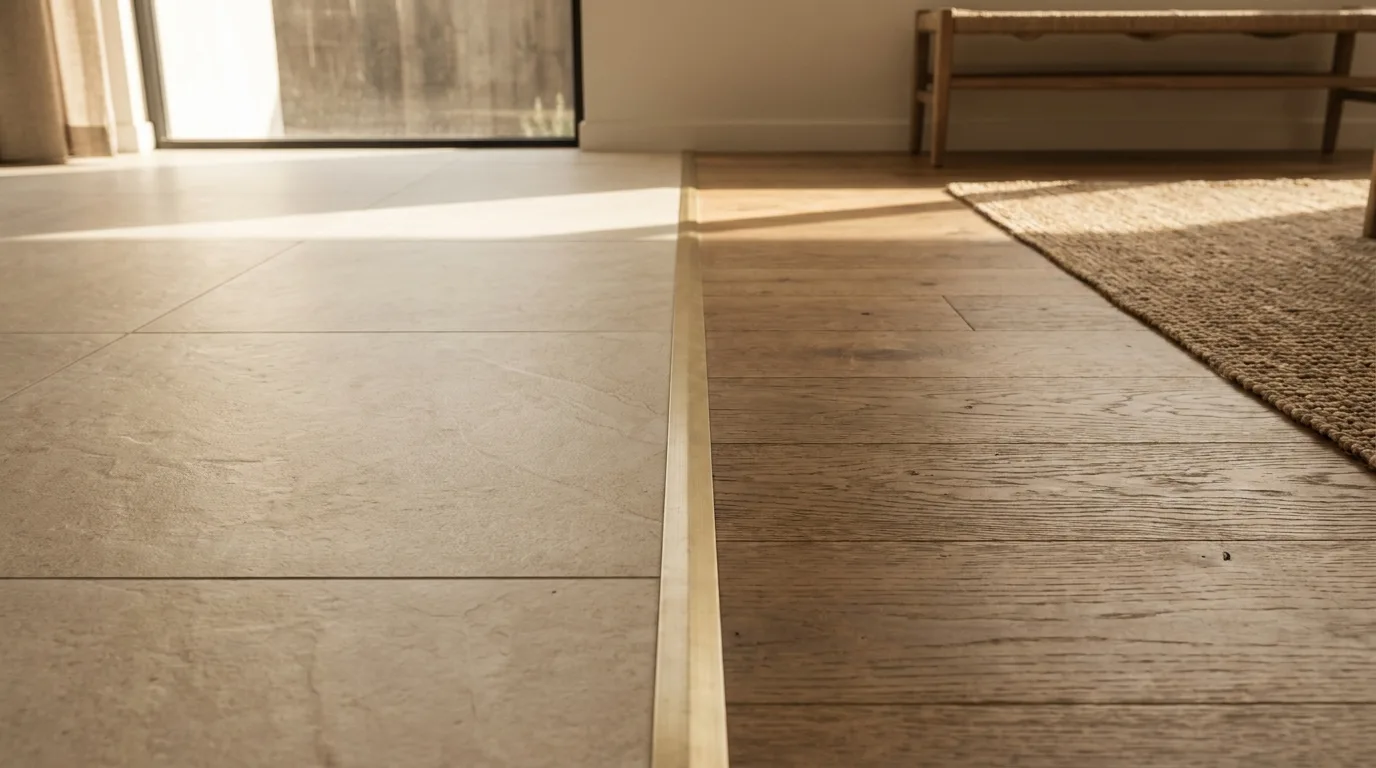
Can I mix tile and hardwood in the same home? Yes, and many San Diego homes do. A common layout: tile through the entry, kitchen, and bathrooms; hardwood through the living, dining, and bedrooms. A clean transition strip keeps it looking intentional.
How do I know if my slab is ready for flooring? We test for moisture vapor emission and check for level before any install. Slabs with high vapor or significant unevenness need prep work first. We cover that in the estimate.
Let’s figure out the right floor for your home
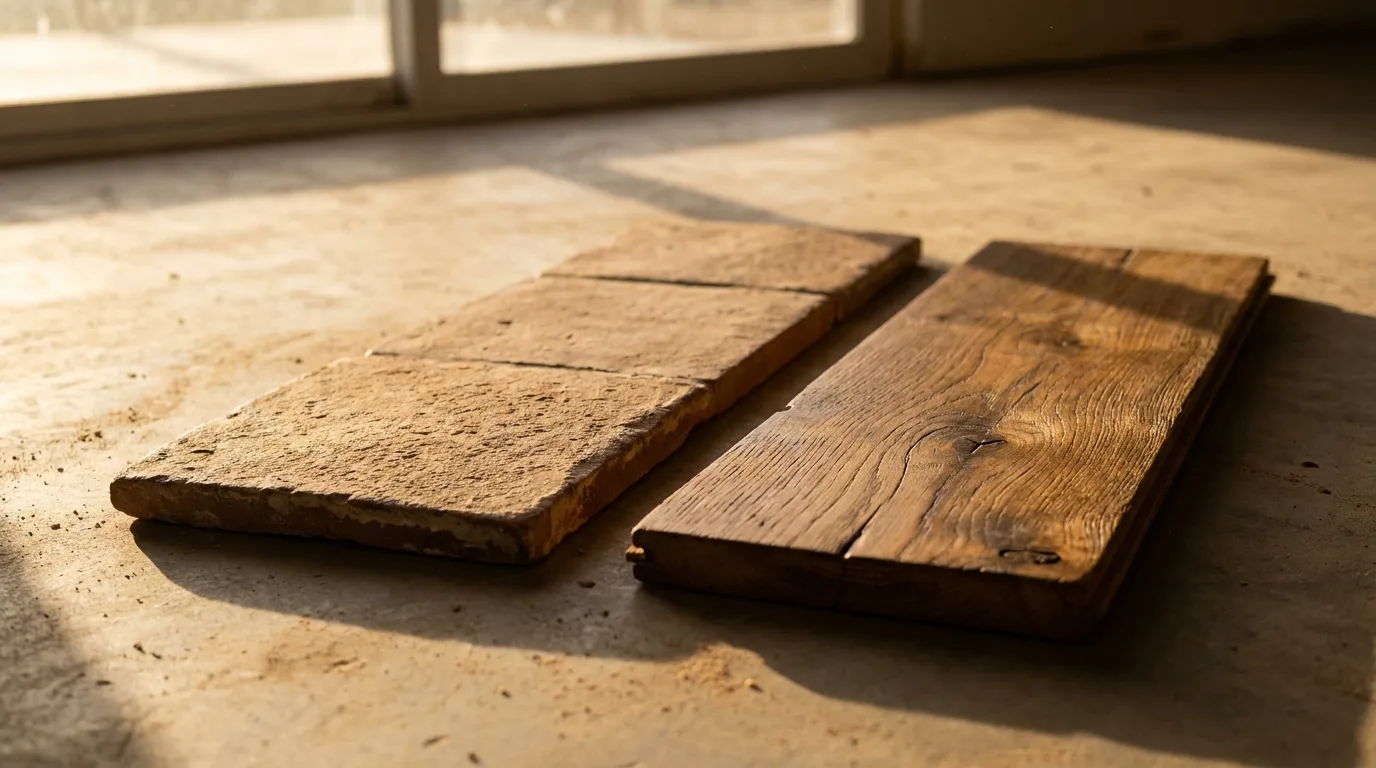
We offer free in-home consultations with samples so you can see tile and hardwood side by side in your actual light and against your existing finishes. Call us at (858) 925-5546 or request a quote and we’ll schedule a time that works for you.