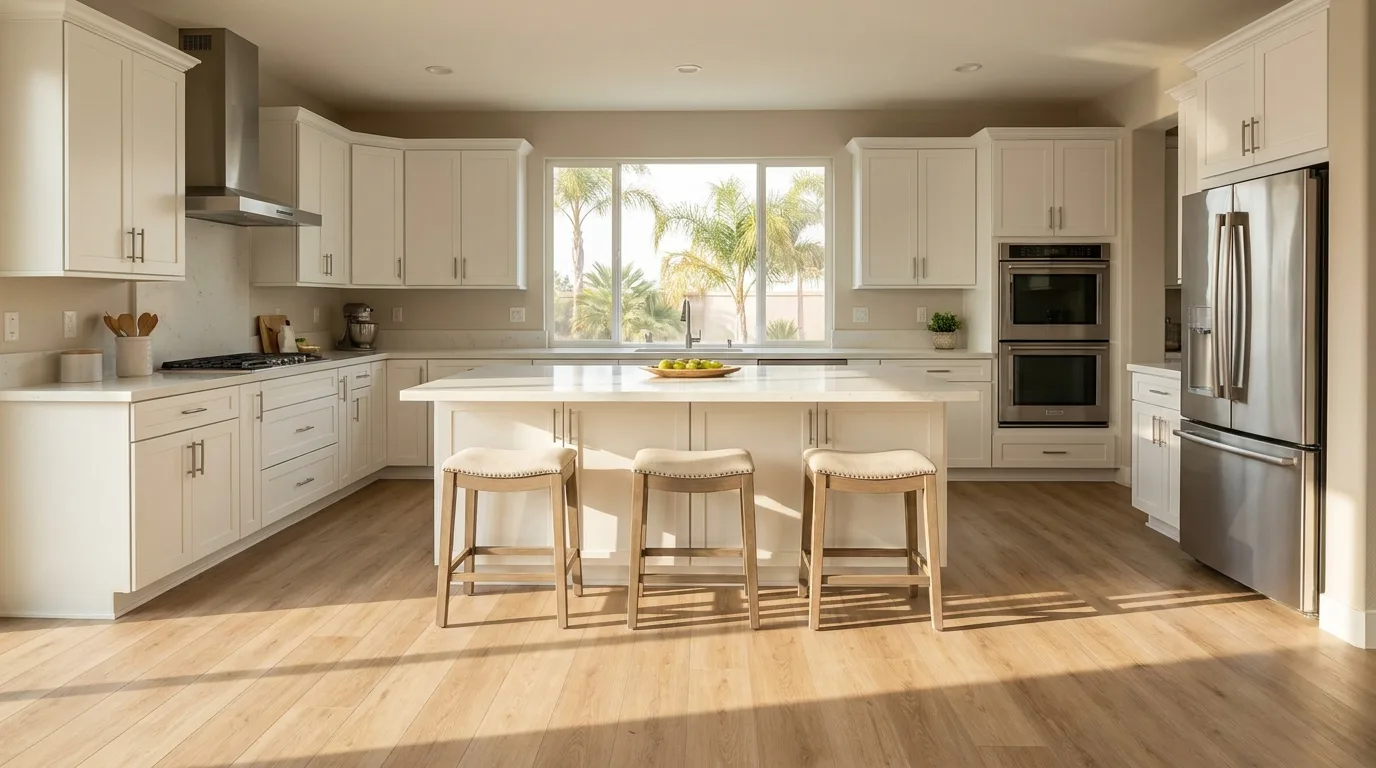
For most San Diego households, the best flooring for kitchens san diego comes down to two options: waterproof luxury vinyl plank or porcelain tile. Both handle spills, sit directly on the concrete slab most local homes have, and hold up through years of daily cooking traffic. The right one depends on your budget, how much time you spend on your feet, and what look you’re after.
The short version
- Waterproof LVP ($5–$9 installed) is the most popular kitchen floor we put in. It’s warm underfoot, forgiving to stand on, and handles spills and the occasional dishwasher leak.
- Porcelain tile ($11–$20 installed) is the toughest and most water-proof pick, but harder on feet and more expensive to install.
- Engineered hardwood ($8–$14 installed) gives you a real wood look on slab, but you need to catch standing water fast.
- Laminate ($4–$7 installed) is the most affordable option, but the seams don’t forgive prolonged moisture, which makes it a risky call in a busy kitchen.
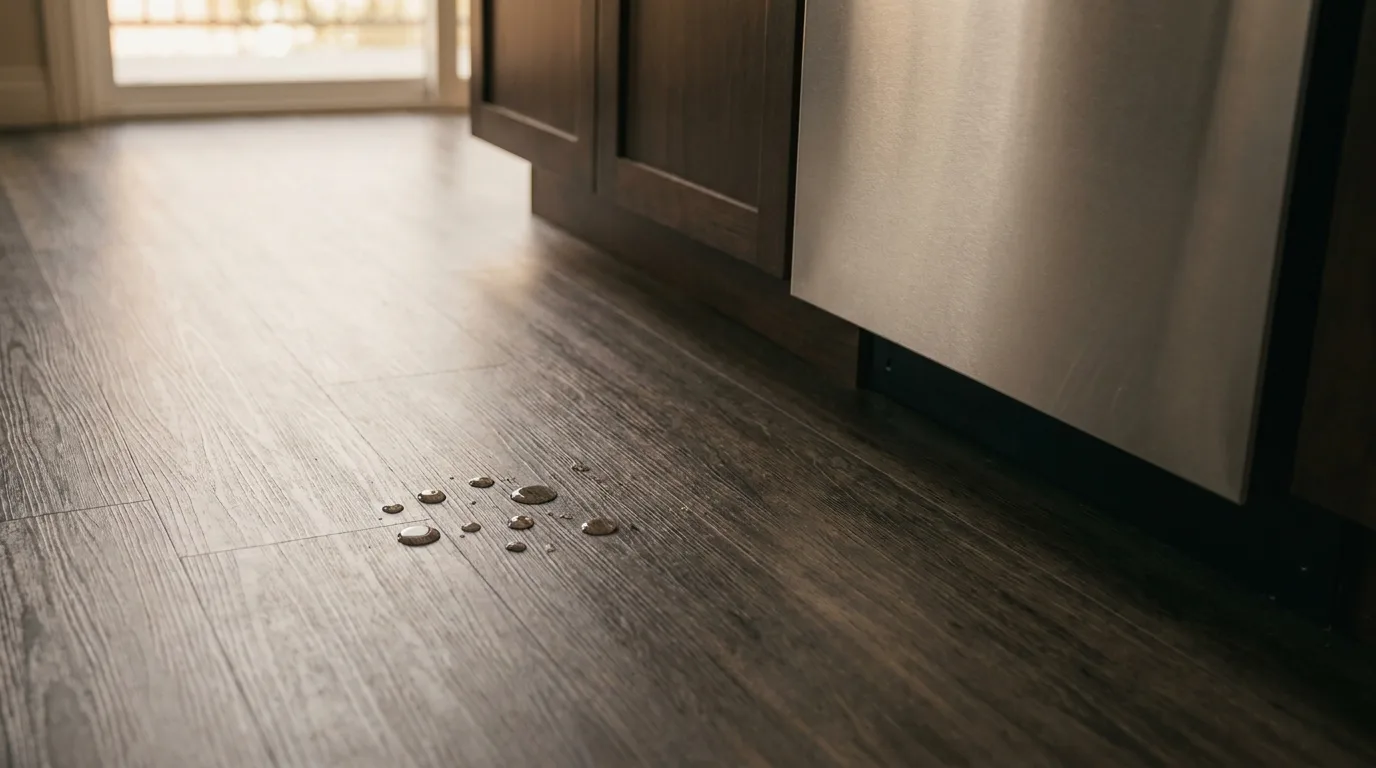
Is LVP or tile better for a kitchen?
For most kitchens, LVP is the better fit. It’s waterproof, warmer underfoot than tile, and costs less to install with faster turnaround. Tile wins when you want the hardest, most heat-resistant surface possible or when the kitchen runs into a large open-format area where you’re already planning tile throughout.
Both go straight down on a concrete slab, which is what the majority of San Diego homes built after the 1970s have. That matters because solid hardwood and standard laminate both need a flat, moisture-controlled subfloor to behave well over time.
If you’re thinking through luxury vinyl plank installation specifically, the 12-mil and 20-mil wear-layer options make a real difference in a kitchen. The 20-mil holds up better under heavy traffic, dropped pots, and chair legs moving across the surface over years.
What makes a kitchen floor different from the rest of the house
Kitchens take on more moisture than almost any other room. You’re dealing with the sink, the dishwasher, and the regular spray and drip that comes with cooking. Dishwasher supply lines and door seals also fail occasionally, and when they do, a non-waterproof floor can swell or buckle overnight.
San Diego’s climate adds another factor. The marine layer keeps coastal homes at higher relative humidity for months at a time, especially in neighborhoods like La Jolla, Ocean Beach, and Coronado. That humidity cycling puts stress on any floor that expands and contracts with moisture, and kitchens compound the exposure.
The safest kitchen floors here are those with a waterproof core all the way through, not just a water-resistant surface coating.
LVP in the kitchen: what to know
Waterproof rigid-core LVP is the floor we install most often in San Diego kitchens. The rigid core doesn’t bend or gap when it gets wet, the wear layer resists scuffs and dropped utensils, and the surface stays comfortable for the hour or two a day most people spend standing at a counter or stove.
The installed cost typically runs $5–$9 per square foot, depending on the wear-layer thickness, the plank width, and how much subfloor prep the slab needs before we start. Thicker planks (7mm and up with the attached pad) also dampen sound and feel softer underfoot, which matters in an open kitchen that adjoins a living space.
One thing to check: not all LVP products carry a full waterproof warranty at the seams. Ask your installer whether the product is warranted for wet areas and what the warranty says about standing water. Quality rigid-core options are, but there’s budget-grade material floating around that isn’t.
Tile in the kitchen: the case for it
Tile flooring installation gives you the hardest, most water-proof, and most heat-resistant surface of any option here. A dropped pot doesn’t dent it. A dripping faucet that goes unnoticed for a week doesn’t damage it. Grease and stains wipe off the surface cleanly. For a household with heavy cooking habits, a busy family, or a kitchen that sees a lot of spills, tile is genuinely hard to beat.
The tradeoffs are real though. Tile is the most expensive option in this comparison, at $11–$20 installed, partly because it takes more labor to set, grout, and seal correctly. It’s also hard underfoot. If you cook for extended periods or have any joint discomfort, standing on tile for an hour feels different than standing on LVP. Anti-fatigue mats help, but they add cost and interrupt the visual continuity of the floor.
Grout lines also need sealing at installation and re-sealing every few years to stay stain-resistant. Light-colored grout in a kitchen is especially prone to showing grease and food residue over time. Darker grout or epoxy grout avoids most of that.
For homeowners in areas like Chula Vista with large open-plan layouts that tie the kitchen into the living and dining space, tile across the whole first floor is a common and practical choice.
Can you put hardwood in a kitchen in San Diego?
You can, with some conditions. Solid hardwood is generally not a good call for San Diego kitchens. It moves with humidity, can’t sit on slab without a plywood subfloor build-up, and a dishwasher leak or sustained moisture exposure can warp it badly.
Engineered hardwood installation is the better wood option here. The plywood or HDF core is dimensionally stable on slab and through humidity swings, and the hardwood veneer on top gives you genuine wood look and feel. Hard species like white oak, hickory, and maple hold up better in a kitchen than softer ones.
The real limitation is standing water. If a spill sits for more than a few minutes, the veneer can absorb it. For a household that cooks carefully and cleans up quickly, engineered hardwood in the kitchen is realistic. For a busy household with kids or a dog that runs in and out, LVP or tile is more forgiving.
Installed cost for engineered hardwood typically runs $8–$14 per square foot, and resale value tends to respond well to real wood in the kitchen.
Is laminate a good choice for a kitchen?
Laminate is the most affordable floor on this list at $4–$7 installed, and quality AC4-rated laminate resists scratches and surface scuffs well. The problem in a kitchen is the seams.
Most laminate is not waterproof at the seam level. Water that gets between planks, from a sink drip, a slow dishwasher leak, or an unnoticed spill, works its way into the HDF core and causes swelling and buckling. Once that happens, the planks need to be replaced.
Laminate flooring installation makes sense in a kitchen only when the household is careful about cleanup and the budget doesn’t allow for LVP. If you can stretch to LVP, the waterproofing difference is worth it in a kitchen specifically.
Kitchen flooring at a glance
| Floor | Waterproof | Comfort underfoot | Installed cost / sq ft | Best for |
|---|---|---|---|---|
| Rigid-core LVP | Yes | Good | $5–$9 | Most households |
| Porcelain tile | Yes | Hard | $11–$20 | Heavy cooking, heat resistance |
| Engineered hardwood | Water-resistant | Excellent | $8–$14 | Wood look, careful households |
| Laminate | No (seams) | Good | $4–$7 | Budget, dry conditions |
Costs reflect typical San Diego County installs in 2026. Your number varies with subfloor condition, layout complexity, and material grade.
Which floor fits which household
Busy family kitchen with kids or pets: Rigid-core LVP. The waterproof core handles the daily spills and wet footprints that come with a full household.
Cook who spends long hours at the stove: Tile with an anti-fatigue mat at the prep station, or thick LVP with attached pad. Both are waterproof; LVP is noticeably easier on joints over time.
Design-forward home where wood feel matters: Engineered hardwood in a hard species with a matte finish. Be prepared to clean spills immediately and re-coat the surface when the wear layer thins.
Rental or short-term flip: Quality laminate or entry-grade LVP. Keep the cost down while still hitting the visual upgrade over old vinyl or worn tile.
Open kitchen tying into living and dining: Tile run throughout or wide-plank LVP in a neutral tone. Both visually extend the space without grout lines interrupting the layout at room transitions.
This Old House’s guide to kitchen flooring options covers some of these tradeoffs in additional detail if you want a second perspective before deciding.
FAQ
What’s the most waterproof kitchen floor? Porcelain tile is the most waterproof option, with no seams or core that can absorb moisture. Rigid-core LVP is a close second and more comfortable to stand on. Both are the right choices for any kitchen where leaks or spills are a real concern.
Does kitchen flooring affect resale value in San Diego? Yes. Hardwood or engineered hardwood typically adds the most perceived value, but buyers also react well to quality tile and LVP that looks clean and current. The bigger driver is condition, so a well-installed, well-maintained LVP floor will show better than beat-up hardwood.
How long does kitchen floor installation take? LVP and laminate in a standard kitchen typically run one to two days, including subfloor prep. Tile takes longer because of setting time and grouting, usually two to three days minimum. Engineered hardwood falls in between.
Do I need to move my appliances for kitchen flooring installation? Usually yes, at least the refrigerator and dishwasher. We handle that as part of the install process and reconnect everything before we leave.
Get a straight answer before you decide
We’ll come to your home, look at your slab, show you material samples in your actual light, and give you a line-itemed quote. No pressure, no estimate that changes at invoice. We serve all of San Diego County.
Call (858) 925-5546 or request a quote.