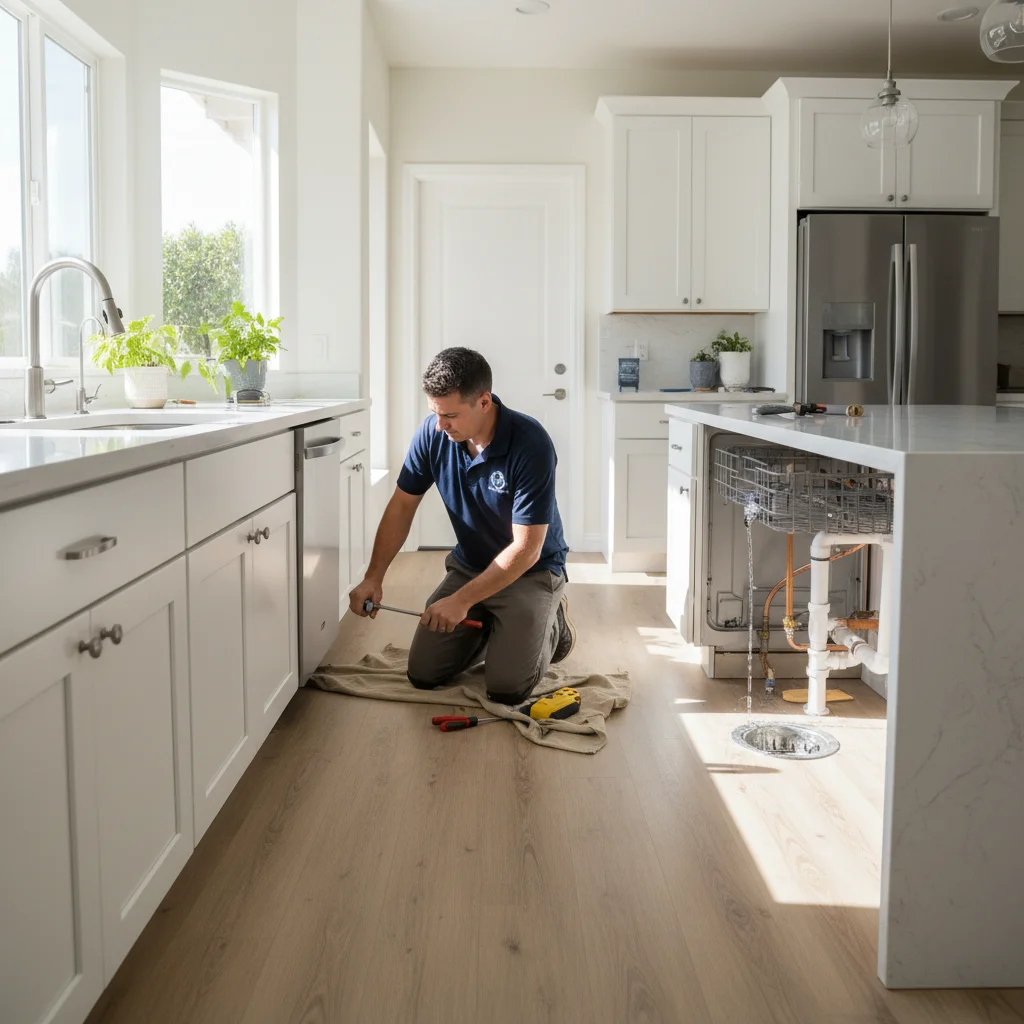
The most reliable waterproof flooring for San Diego homes is rigid-core SPC vinyl, followed by porcelain or ceramic tile. Both shrug off spills, pet accidents, and the moisture that comes off a concrete slab. Water-resistant laminate is a step down. It handles surface spills but fails on standing water. Here’s how each option actually performs in San Diego conditions, what it costs installed, and how to pick.
Waterproof vs water-resistant: the line that matters
These two terms get used like they mean the same thing. They don’t, and the difference shows up the day something spills.
Waterproof means the plank or tile itself will not absorb, swell, or break down when water sits on it. SPC vinyl, porcelain tile, and sheet vinyl are waterproof at the material level.
Water-resistant means the surface repels water for a while, but standing moisture eventually reaches the core and ruins it. Most laminate sits here, even the products marketed with a “waterproof” sticker. The core is compressed wood fiber. Wood fiber and standing water don’t mix.
For a San Diego coastal home, the distinction is bigger than it sounds. Marine-layer humidity, slab moisture, and the occasional pet accident add up to more moisture exposure than a drier inland climate. We point clients toward genuinely waterproof material in any room that touches water or sits on slab.
The honest ranking for San Diego homes
1. SPC rigid-core vinyl (the default winner)
SPC stands for stone-plastic composite. The core is a dense, rigid blend of limestone and PVC that doesn’t swell, doesn’t telegraph subfloor imperfections, and stays dimensionally stable across temperature swings. It’s the floor we install most across San Diego County, and for good reason.
Why it fits here:
- Fully waterproof, top to core. Spills, mopping, pet accidents, no problem.
- Installs directly over slab with proper underlayment and moisture testing.
- Handles the temperature swing between a marine-layer morning and a warm afternoon without gapping.
- Pet claws and beach sand scratch it far less than hardwood or laminate.
Where it falls short: it has a rigid, slightly harder feel underfoot than WPC vinyl or wood. And cheap SPC looks cheap. Spend for an embossed-in-register texture and a 20-mil-plus wear layer if it’s going in a high-traffic home.
2. Porcelain and ceramic tile (most durable, most permanent)
Tile is waterproof in the truest sense. The tile body absorbs almost no water, and with the right setting materials and grout, the whole assembly handles standing water indefinitely. It’s the right call for bathrooms, laundry rooms, entries that catch beach sand, and any space you want to last 30-plus years.
Why it fits here:
- Genuinely permanent. It outlasts every other option on this list.
- Handles hard water, sand, and pet traffic without wearing.
- Stays cool, which reads as a feature in San Diego’s warm months.
Where it falls short: it’s hard and cold underfoot, grout lines need occasional sealing, and San Diego’s hard water leaves mineral haze on dark tile if you don’t wipe it. Installed cost runs higher than vinyl, and a bad subfloor prep means cracked tile down the line.
3. Water-resistant laminate (budget pick, with limits)
Modern laminate looks good and costs less than the options above. But almost all of it is water-resistant, not waterproof. The wood-fiber core swells if water reaches it through a seam or an unsealed edge. We don’t recommend it for bathrooms, laundry rooms, or slab-level rooms in coastal zip codes where humidity runs high.
It earns a place in bedrooms, hallways, and living rooms in drier inland areas, on a sound subfloor, in a household without big spill risk. For the full breakdown, see our post on whether laminate is a good choice in San Diego.
4. Sheet vinyl (waterproof, but dated)
Sheet vinyl is fully waterproof and cheap, with very few seams for water to find. It’s a fine budget choice for a laundry room or a rental. It just doesn’t read as nice as plank vinyl or tile, and resale buyers notice. The crews we send install it when budget is the deciding factor and the room is utilitarian.
What it costs installed in San Diego
Prices below are installed, including standard subfloor prep, in San Diego County. Your number depends on room shape, prep needs, and material grade.
| Flooring type | Material grade | Installed cost / sq ft | Truly waterproof |
|---|---|---|---|
| SPC rigid-core vinyl | Mid to premium | $5 - $9 | Yes |
| Porcelain / ceramic tile | Standard to premium | $9 - $20 | Yes |
| Water-resistant laminate | Budget to mid | $4 - $8 | No (resists, not proof) |
| Sheet vinyl | Budget | $3 - $6 | Yes |
Two San Diego-specific cost factors people miss:
- Slab moisture testing and prep. Many homes built after 2000 sit on slab. Before any floor goes down, we test slab moisture. A slab reading high needs a moisture barrier or a different install method, which adds cost but prevents a failed floor.
- Subfloor leveling. Older coastal homes and some tract builds have slab variation. Leveling compound adds $1 to $3 per square foot but is non-negotiable for a flat, quiet floor.
For a deeper LVP cost breakdown, see our luxury vinyl plank installation cost guide.
Why San Diego changes the waterproof math
National flooring guides treat waterproof flooring like the same product works everywhere. It doesn’t. Three local realities tilt the decision.
Coastal humidity and the marine layer
Homes within a few miles of the coast, from Imperial Beach up through Carlsbad and Oceanside, sit in higher year-round humidity than inland San Diego. That humidity is exactly why water-resistant laminate disappoints near the coast and why genuinely waterproof material earns its premium. It’s also why even waterproof floors need to acclimate before install. SPC is stable, but it still expands and contracts slightly with temperature, and a floor installed cold and tight can buckle on the first warm afternoon. We acclimate material on site before laying it.
Slab-on-grade construction
Most San Diego homes built after 2000 sit on a concrete slab, not a raised wood subfloor. Slab transmits ground moisture upward. Solid hardwood cups and fails on slab. SPC vinyl, tile, and engineered products handle slab when installed with the right moisture barrier and testing. If your home is on slab, your waterproof options narrow to vinyl, tile, or engineered, and the moisture test is mandatory.
Hard water, sand, and pets
San Diego’s hard water leaves mineral residue, beach households track sand, and a lot of homes have dogs. All three favor a floor that’s hard-wearing and easy to wipe. SPC vinyl and porcelain tile both win here. Sand acts like sandpaper on softer surfaces, so the harder wear layer of quality SPC or the glazed surface of porcelain holds up where laminate dulls.
How to pick, room by room
- Kitchen: SPC vinyl or tile. Both waterproof, both handle spills and traffic.
- Bathroom: Porcelain tile first, SPC vinyl second. Never laminate.
- Laundry room: Tile or sheet vinyl. Standing-water risk is highest here.
- Living room and bedrooms: SPC vinyl for a waterproof whole-floor run, or engineered hardwood if you want real wood on slab.
- Beach-adjacent entry: Porcelain tile. It eats sand and water without complaint.
- Whole-home single material: SPC vinyl is the most versatile waterproof choice for a continuous look across rooms.
If you’re weighing tile against vinyl specifically for wet rooms, our tile vs LVP for bathrooms guide goes deeper.
Frequently asked questions
Is luxury vinyl plank really waterproof?
Rigid-core SPC and WPC vinyl are waterproof at the material level. Water won’t swell or damage the plank. The one caveat: water can still pass through seams and sit on the subfloor underneath, so a major flood needs cleanup even with a waterproof floor. The floor itself survives.
Is waterproof laminate a real thing?
Most laminate is water-resistant, not waterproof, because the core is wood fiber. A few premium products add a sealed core and click-lock edges that hold up better, but we still don’t recommend laminate for bathrooms, laundry rooms, or high-humidity coastal slab rooms. For those, choose vinyl or tile.
Does waterproof flooring still need to acclimate in San Diego?
Yes. Even SPC vinyl expands and contracts slightly with temperature. In a coastal climate with a cool morning marine layer and warm afternoons, material installed cold and tight can buckle. We acclimate flooring on site before install. More on this in our coastal humidity flooring guide.
Can I put waterproof flooring directly on a concrete slab?
SPC vinyl, tile, and engineered products can go on slab with proper moisture testing and a barrier where needed. Solid hardwood cannot. If your home was built after 2000 in San Diego, it’s likely on slab, and a moisture test should come before any flooring decision.
What’s the most durable waterproof floor for a home with pets?
Porcelain tile is the most scratch and wear resistant. Quality SPC vinyl with a thick wear layer is a close second and warmer and quieter underfoot. Both beat laminate for pet households, especially with beach sand in the mix.
Which waterproof floor adds the most resale value in San Diego?
Porcelain tile and quality SPC vinyl both read well to buyers. Tile carries a premium in wet rooms and entries. For whole-home, mid-to-premium SPC vinyl is the safe resale pick that buyers across San Diego markets expect.
Want help choosing the right waterproof floor?
We’ll do a free in-home measure, test your slab moisture, and bring samples so you can see SPC vinyl, tile, and engineered side by side in your light, next to your trim. You get an upfront, line-itemed quote that stays valid 30 days, with no pressure either direction.
Call (858) 925-5546 or request a quote. We cover all of San Diego County, and the crews we send install the waterproof floor that fits your rooms, your slab, and your budget. See our luxury vinyl plank installation service for the option most San Diego homes land on.