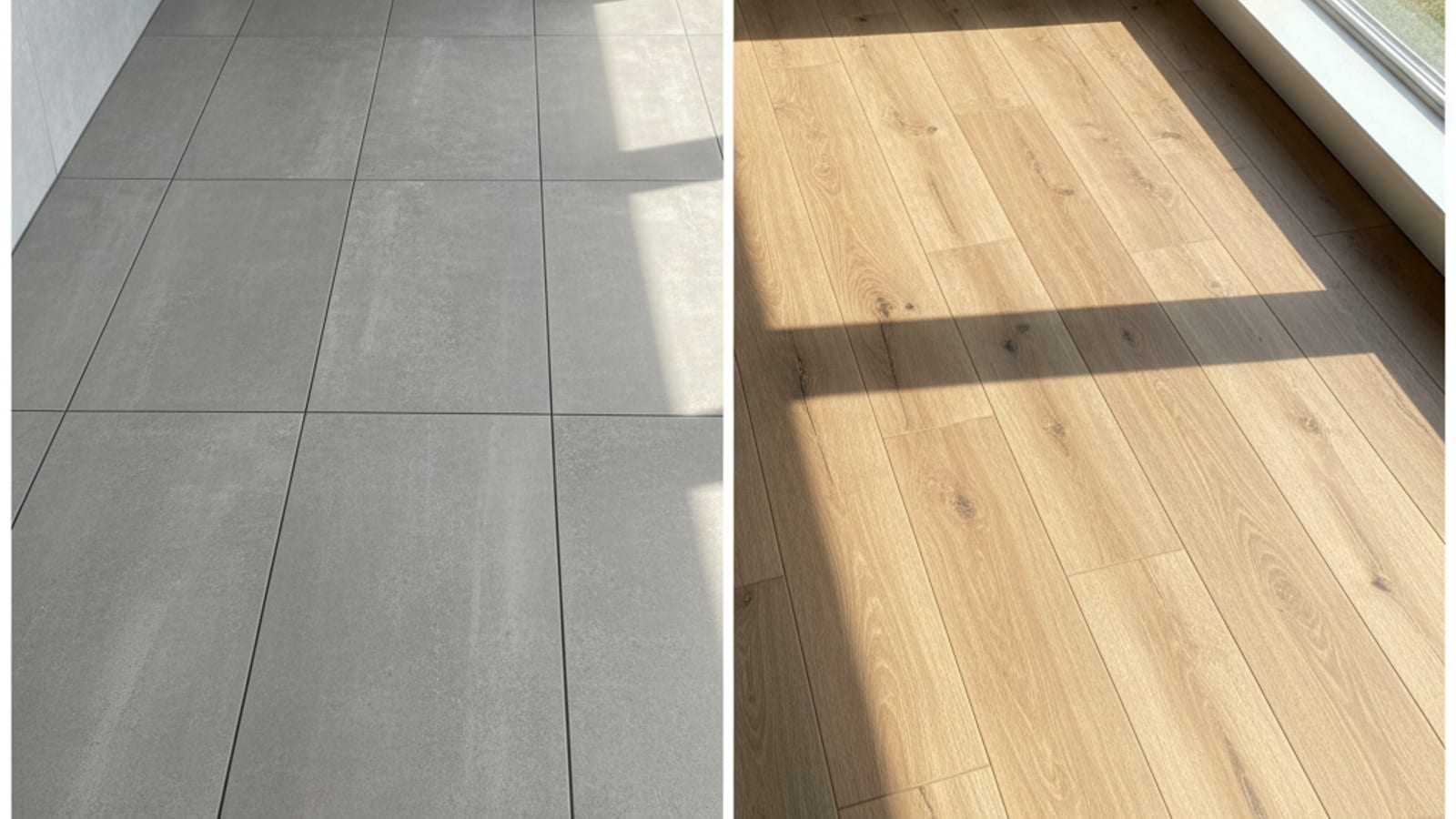
Bathrooms are the one room where the LVP-vs-real-flooring conversation gets tighter. LVP wins most of the rest of the house. In bathrooms, tile fights for it. Here’s how to decide.
The short version
Tile wins for primary bathrooms in homes you plan to keep 10+ years. Worth the upfront cost.
LVP wins for secondary bathrooms, rentals, and budget-conscious primary baths where the cost difference matters more than long-term lifespan.
Both work. The question is what you’re optimizing for.
Where tile genuinely wins
Tile is the right answer when:
- You want a 50-year floor. Quality porcelain in a properly installed bathroom lasts essentially forever. Grout needs occasional sealing or recoloring, but the tile itself doesn’t wear out.
- You want heated floors. Tile is the only practical floor for radiant heat in a bathroom. Warm tile in the morning is a small upgrade you notice every day.
- Resale matters. In San Diego markets that trade premium homes (Rancho Santa Fe, La Jolla, Coronado, Carlsbad), tile in primary baths is expected. LVP reads as builder-grade.
- You want pattern variety. Mosaic, hex, herringbone, large-format, mixed materials, tile has design options LVP cannot match.
Where LVP genuinely wins
LVP is the right answer when:
- Budget matters. Tile install in a typical 50 sq ft bathroom runs $1,500 to $2,500. LVP runs $400 to $700. Real difference.
- You want install speed. Tile is 3–5 days. LVP is one day.
- It’s a rental or flip. LVP looks great, handles tenant wear, and replaces cheaply when needed.
- You don’t want grout. Some homeowners genuinely prefer the clean, grout-free look of LVP planks to tile. Personal preference.
- The shower stays separate. LVP outside a fully waterproofed shower handles bathroom moisture fine.
Cost breakdown, same 60 sq ft bathroom
Tile installation (mid-grade 12x24 porcelain, polymer-modified grout, Schluter Ditra under, sealed grout):
- Porcelain tile material: $300 ($5/sq ft)
- Schluter Ditra membrane: $120
- Thinset, grout, sealer: $80
- Demo of existing flooring: $180
- Install labor: $720
- Sealer and cleanup: $50
- Total: ~$1,450
LVP installation (mid-grade rigid-core SPC, vapor-barrier underlayment):
- LVP material: $300 ($5/sq ft)
- Underlayment: $40
- Demo: $120
- Install labor: $180
- Trim, transitions, threshold: $80
- Total: ~$720
For the same room, tile is ~2x the cost of LVP. The math determines a lot of decisions.
What about waterproofing?
LVP is waterproof at the plank, water cannot warp or swell the rigid core. But seams between planks are not always watertight. A bathtub overflow that sits for two days finds its way under the floor.
Tile with proper installation (Schluter Ditra membrane + waterproof grout + sealed seams) creates a continuous waterproof surface. Standing water is a non-issue.
For showers specifically, neither LVP nor LVT are appropriate, you need fully waterproof tile or a one-piece fiberglass surround. We don’t install LVP in shower stalls, ever.
Heated floors
Tile + electric radiant heat (Schluter Ditra-Heat or Suntouch) works beautifully. Cost runs $8 to $12 per square foot of heated area, on top of the tile install. Includes a low-voltage thermostat and floor sensor.
For a typical 60 sq ft bathroom, heated tile adds $480 to $720 over standard tile install. In primary baths, most homeowners who do it say they’d pay for it again.
LVP plus radiant heat is technically possible but runs into manufacturer warranty issues, most LVP brands don’t warranty over heated floors. Skip it.
Slip resistance
Modern porcelain tile has dynamic coefficient of friction (DCOF) ratings that meet or exceed ANSI A137.1, wet or dry, it grips well. The myth of “tile is slippery” comes from old polished marble or polished ceramic. Today’s matte and textured porcelain tiles are not slippery.
LVP also has slip-resistant textures. Both products handle wet feet fine.
Resale impact
In San Diego homes selling above $1M, real estate agents consistently report that tile in primary baths reads as expected and LVP reads as a downgrade. Below that price point (most tract homes in eastern Chula Vista, Otay Ranch, Escondido, San Marcos), LVP and tile are roughly comparable.
For homes you’re flipping or selling within 5 years, the cost difference between tile and LVP rarely pencils out unless the home is in a premium-tile market.
For homes you’re staying in 10+ years, tile pulls ahead on longevity and lifestyle (heated floor, design variety) regardless of resale.
How to decide
Five questions:
- What’s the bathroom for? Primary suite, secondary bath, kids’ bath, half bath, rental?
- How long are you in the home? 10+ years → tile wins on longevity. Under 7 → LVP often pencils better.
- Heated floors? Yes → tile.
- Budget? Strict → LVP. Flexible → either.
- Rest of the house? Don’t put LVP next to existing tile in adjacent rooms, or vice versa, unless the transition is planned.
Want product samples?
Free in-home consult across all 67 San Diego County cities. We bring tile and LVP samples for direct comparison in your bathroom, under your light, against your existing finishes.
Call (858) 925-5546 or request a quote.