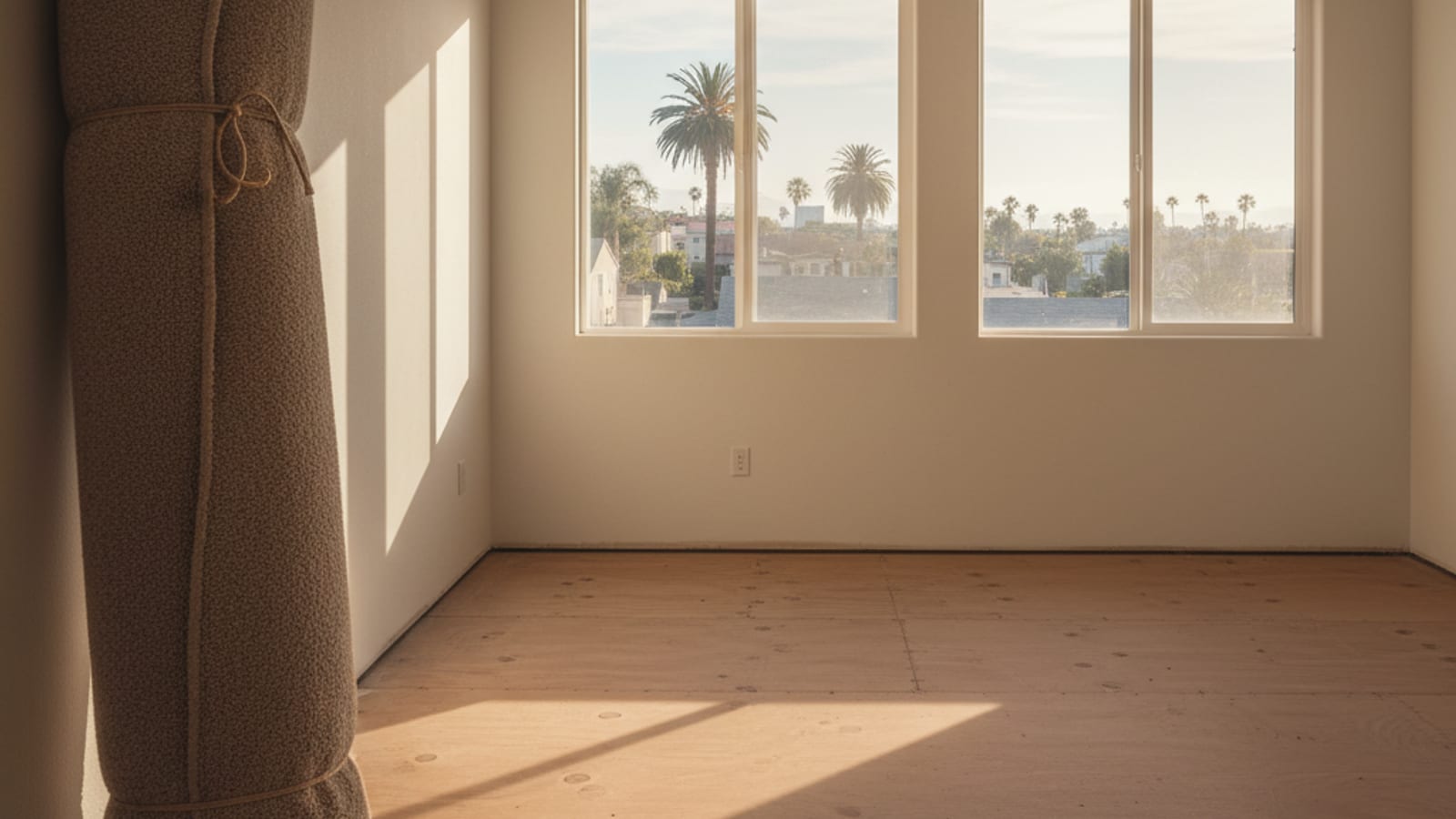
Pulling out the carpet and putting in real flooring is consistently in the top three highest-ROI home improvements at resale. It’s also one of the most disruptive, a multi-day project that takes the house offline. Here’s what real 2026 pricing looks like and what to expect.
What does it actually cost?
For a typical 1,000 square foot conversion in a San Diego single-family home:
- Demo and prep only: $1,500 to $3,000 (depending on subfloor condition)
- + LVP installation: $5,000 to $9,000 ($5–$9/sq ft)
- + Engineered hardwood: $8,000 to $14,000 ($8–$14/sq ft)
- + Solid hardwood (wood subfloor): $9,000 to $16,000 ($9–$16/sq ft)
- + Tile installation: $11,000 to $20,000 ($11–$20/sq ft)
For most homeowners, an LVP conversion lands at $7,000 to $11,000 all-in. Engineered hardwood lands at $10,000 to $16,000. Solid hardwood at $12,000 to $19,000.
What’s in the demo and prep cost?
The “demo and prep” line item covers:
- Carpet removal and rolled-up disposal
- Pad removal
- Tack strip removal (every 1.5–2 ft along walls)
- Staple removal (hundreds of staples in a typical room)
- Subfloor inspection, checking for water damage, soft spots, squeaks
- Squeak repair (screw-down to joists)
- Threshold and transition rebuild
- Haul-away and dump fees
That’s $1.50 to $3 per square foot depending on what we find under the carpet. Older homes (pre-1990) sometimes have surprises, vinyl tile under the carpet, water damage from a leak nobody knew about, or a subfloor that’s settled and needs leveling.
What’s under the carpet?
In most San Diego homes, one of two things:
1. Plywood subfloor (homes with a crawlspace or older slab-on-grade builds with framed floors). Usually plywood is in fine shape, we screw it back down to the joists if it’s loose, then install on top.
2. Concrete slab (most homes built after 1990). The carpet was glued or tacked over slab. We remove the carpet, scrape any remaining adhesive, grind down high spots if the slab is out of flatness tolerance.
Occasionally we find a third surprise:
3. Old vinyl tile or sheet vinyl under the carpet (common in pre-1980 homes). If the tile predates 1980, we test for asbestos before disturbing it. Confirmed asbestos requires specialty abatement we refer out, we can’t grind or break it without proper licensing.
How long does it take?
Single-room conversion (e.g., master bedroom):
- Day 1: Demo + subfloor prep (4–6 hours)
- Day 2: New floor install (LVP same day for small rooms, hardwood needs acclimation in advance)
Whole-house conversion (1,000–1,500 sq ft):
- Day 1: Demo + subfloor prep
- Days 2–4: New floor install (LVP) or 3–5 days for hardwood
- Day 5: Transitions, trim, walk-through
For hardwood specifically, add 5–10 days of on-site acclimation upstream, boards delivered to the rooms early so they equilibrate to the home’s humidity before nailing.
Do I need to move out?
Usually not for the whole project, but plan to be out of the affected rooms during demo and install. For whole-house jobs, most clients use other parts of the home and stay off the floor during cure (especially for site-finished hardwood, which needs 24–48 hours per coat).
For LVP conversion, the floor is walk-on as soon as the install is done. No cure time needed.
What does this do to home value?
Hard-surface flooring is consistently in the top 5 ROI home improvements in real-estate listings. Most appraisers and agents will tell you the same thing: dated carpet is a deal-killer, and modern hard surface (LVP or hardwood) shows well.
Typical ROI on a quality LVP or hardwood install is 70–90% of cost at resale. Hardwood pulls slightly higher in markets that already trade hardwood as a baseline (Rancho Santa Fe, Coronado, La Jolla, parts of Carlsbad and Encinitas). LVP closes the gap in tract markets where most comparable homes have it.
Decisions to make before the project starts
Six things to settle at the in-home consult:
- Product: LVP, engineered, solid hardwood, laminate, or tile. We bring samples.
- Color and style: White oak or walnut tone? Wide plank or standard? Wire-brushed or smooth?
- Whole house or room-by-room? Whole house is more efficient and gives continuous transitions. Room-by-room works for budget reasons.
- Existing trim and baseboards: Keep them and trim around, or remove and replace with new shoe molding?
- Threshold and transitions: How does the new floor meet existing tile or other rooms?
- Furniture moves: Are you moving it or are we?
We line-item all of this in the quote so you know what you’re paying for.
Common pitfalls
Three things that go wrong on bad conversions:
Skipping subfloor prep. Loose subfloor, soft spots, water damage that wasn’t addressed before the new floor went down, all show up within months.
Skipping slab moisture testing on slab homes. New floor’s edges curl or delaminate within 12–24 months because moisture wasn’t mitigated.
Cheaping out on transitions. Mismatched threshold heights, gaps at door frames, and visible expansion gaps that weren’t covered properly. The floor itself looks great; the trim looks rushed.
We test, prep, and trim properly on every install. It’s not glamorous work, but it’s what makes the floor last.
Want to plan a conversion?
Free in-home consult across all 67 San Diego County cities. We pull a corner of carpet to see what’s underneath, measure the rooms, test the subfloor, and bring product samples so you can decide on the spot.
Call (858) 925-5546 or request a quote.