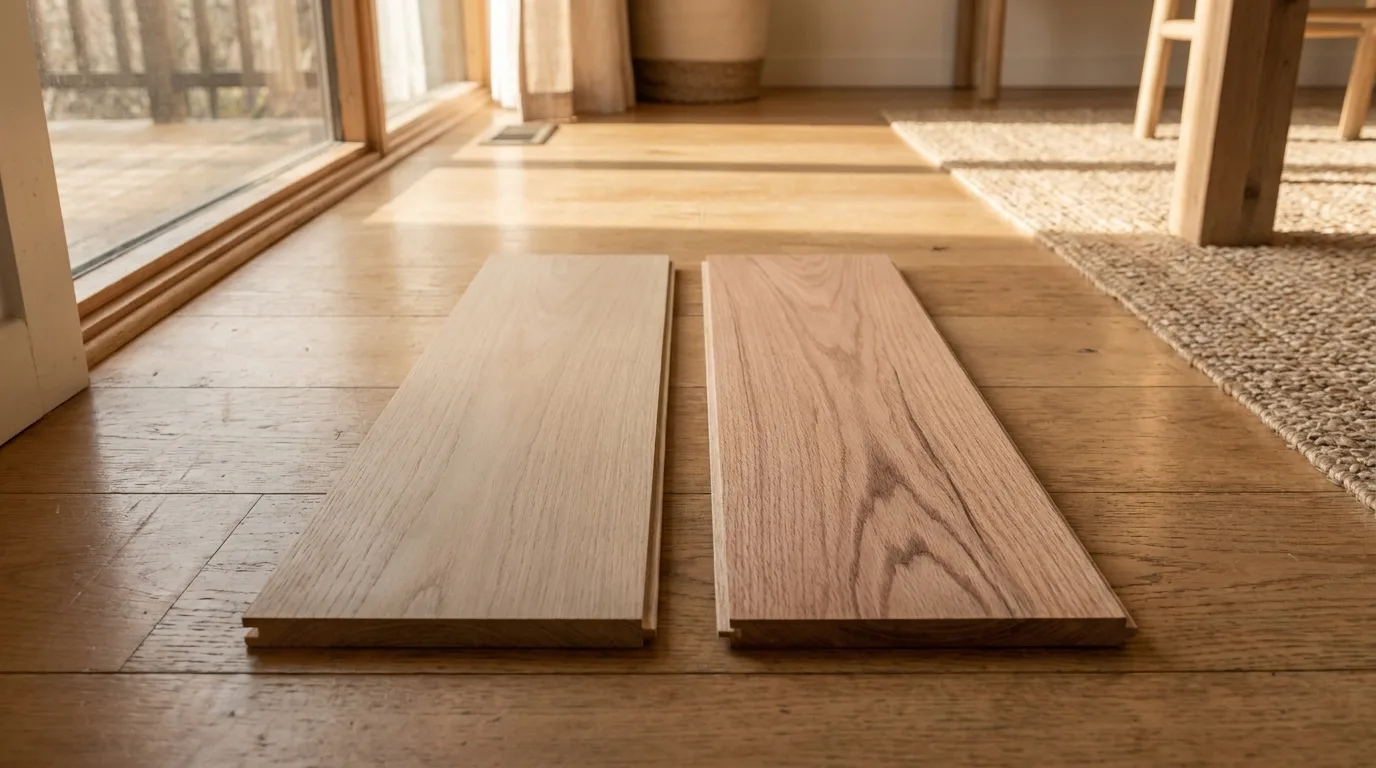
When homeowners ask us about white oak vs red oak flooring San Diego installs, the short answer is this: white oak is the go-to for modern San Diego homes because it has a tighter, more neutral grain and takes today’s cool and natural stains cleanly. Red oak is warmer-toned, slightly more affordable, and hides everyday wear well. Both are genuine hardwoods, both last decades, and the right choice depends on your existing decor, your stain direction, and your budget.
Here’s the full breakdown so you can walk into a showroom knowing exactly what to ask for.
The short version
- White oak has a tighter, straighter grain and a brown/neutral undertone that pairs naturally with gray, white, and light-natural finishes common in coastal San Diego design.
- Red oak has a more pronounced cathedral grain with a noticeable pink/red tone that fights gray stains but looks beautiful under warm amber and honey tones.
- White oak is slightly harder (around 1350 Janka vs around 1290 for red oak) and more resistant to moisture, which matters near the coast.
- White oak typically costs a modest premium over red oak, but both species land in the $9–$16 per square foot installed range in San Diego, depending on grade and finish.
- For resale, white oak is the current favorite in coastal California markets.
What’s the real difference between white oak and red oak?
The names refer to two separate botanical groups, not just color shades. They look similar in a lumber yard photo but read very differently on a floor.
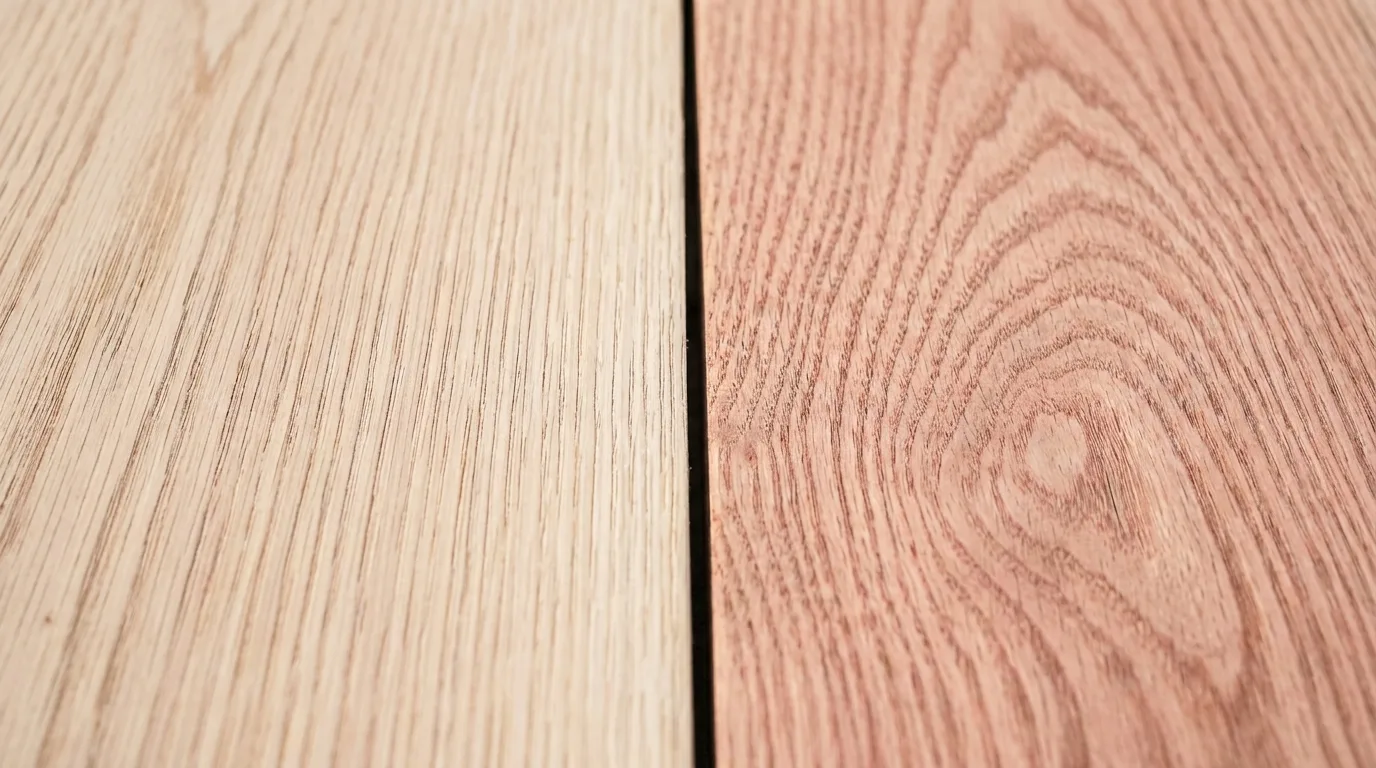
Grain pattern. White oak has a tight, relatively straight grain with prominent ray flecks when quarter-sawn. Those flecks give white oak its clean, almost linen-like texture. Red oak has a more open, cathedral grain, with strong arching lines that are visually bold. Neither is better in the abstract, but white oak’s quieter pattern reads as more versatile in contemporary rooms.
Undertone. This is the detail most people miss until they get a stain sample on the floor. White oak reads brown to tan with cool gray undertones. Red oak has a distinct pink or reddish cast in its raw wood. That pink undertone is not a flaw; it’s warm and inviting under the right finish. But it becomes a problem if you’re trying to achieve a gray, driftwood, or Scandinavian-white look. The red undertone pushes back against cool stains and the result often looks muddy.
Porosity. White oak’s pores are tyloses-filled, which means the wood grain is tighter and less permeable. That’s why white oak is used for wine barrels. On a floor it means better moisture resistance, a characteristic worth having a few blocks from the ocean in La Jolla or on a first floor in Coronado.
How does each species take stain?
White oak is the more forgiving species for staining. It accepts cool grays, soft whites, warm naturals, and deep espressos without fighting the color. The neutral undertone doesn’t interfere with the finish, so what you see on the sample chip is close to what you get on the floor. This is a significant practical advantage because stain selection is already stressful enough.
Red oak is best left with its natural tone or pushed toward amber, honey, or golden-brown finishes that complement rather than fight its pink cast. Under a warm natural oil or a honey stain, red oak is genuinely beautiful. The problem comes when someone sees white oak on a design blog, buys red oak to save a little money, and then asks for a gray stain. The floor ends up with a strange purple or greenish hue that no amount of coats will fix. If you love gray floors, budget for white oak.
One option worth mentioning for red oak: a strong dark stain like walnut or ebony can suppress the pink cast effectively. It’s not a workaround for every design, but it works in the right context.
Which oak is better for San Diego homes?
For most of the San Diego remodels we do, white oak wins. Here’s why that’s specific to this market rather than just a trend.
San Diego’s dominant residential aesthetic right now is coastal contemporary: light walls, natural textures, indoor-outdoor flow, and a palette that skews toward white, warm gray, and natural linen tones. White oak’s neutral undertone slots into that palette without effort. In neighborhoods like Del Mar, Encinitas, and Mission Hills, white oak floors look like they’ve always belonged.
Red oak is still a strong choice for older Spanish Colonial or Craftsman homes where the warmer undertone matches the existing millwork and cabinetry. If the rest of your house is already warm-toned and you’re refinishing existing red oak floors rather than installing new, keeping or enhancing the warm character with floor refinishing often makes more financial sense than ripping it out and starting over.
Coastal humidity is another factor. San Diego’s marine layer and proximity to the ocean create real moisture swings in some neighborhoods. White oak’s tighter grain and better moisture resistance give it a practical edge in homes within a mile or two of the water. Coronado homeowners, in particular, often see more expansion and contraction in their floors than homes further inland.
Does white oak cost more?
Yes, but not dramatically. White oak commands a modest premium because demand has outpaced supply as it became the dominant species in contemporary design. Expect to pay roughly $1–$3 per square foot more for white oak than red oak at comparable grades.
For a full hardwood flooring installation, both species typically land between $9 and $16 per square foot installed in San Diego, covering materials, underlayment, and labor. The spread in that range comes down to grade (character grade vs. select grade), plank width (wider planks cost more), and finish type (site-finished costs more than pre-finished but gives you more stain control).
If the white oak premium is a concern, engineered versions of both species offer a way to get the look with greater dimensional stability. The crews we send install both solid and engineered formats; you can read more about the process in our engineered hardwood installation guide.
Janka hardness: does it matter day to day?
The Janka hardness test measures how much force it takes to embed a steel ball halfway into a wood plank. White oak scores around 1350; red oak scores around 1290. In practical terms, both are solidly in the durable range for residential use. Neither will dent under normal foot traffic, furniture, or pets.
The difference becomes relevant at the margins. White oak is a slightly better choice for very high-traffic areas or households with large dogs. Red oak at 1290 is still harder than many popular hardwoods, including pine and cherry, so it’s not a fragile option. The National Wood Flooring Association publishes a full Janka comparison if you want to benchmark either species against alternatives.
What does resale data say for San Diego?
We’re flooring contractors, not real estate agents, so take this as field observation rather than certified data. What we hear consistently from agents and homeowners is that white oak floors photograph well, show well in listing photos, and are immediately recognized by buyers in the current market. They read as “updated” in a way that fits the coastal California buyer’s mental model of a move-in-ready home.
Red oak floors in good condition hold their value well, particularly in homes where the architecture supports a warmer palette. Old-growth red oak with tight grain from a 1950s or 1960s home can actually be more desirable than new white oak if it’s refinished properly. The resale edge for white oak is most pronounced in new construction and full renovation contexts where buyers are comparing your floor directly to white-oak-everywhere comps.
FAQ
Can I stain red oak to look like white oak? No, not reliably. The pink undertone in red oak will conflict with the cool neutrals that define the white oak look. A gray stain on red oak often turns greenish or purple. If you want the white oak aesthetic, buy white oak.
Is white oak worth the extra cost? For most San Diego homes being renovated for modern living or resale, yes. The stain flexibility alone is worth the premium because it keeps your design options open and reduces the risk of a $12,000 floor that fights your paint color.
Can I mix white oak and red oak in the same home? Technically yes, but we’d advise against it on the same floor plane. The undertone difference will be obvious and distracting. If you’re doing one species upstairs and one downstairs, a strong visual break between the areas makes it work better.
What if I have existing red oak floors and want a gray look? Talk to us before committing. In some cases, a very dark stain or a commercial-grade gray that’s been tested specifically on red oak can work. We’ll do a sample patch first. We won’t let you go into a full refinish blind on a color that’s likely to disappoint.
Ready to see samples in your home?
The best way to make this decision is to hold actual planks in your space under your light. We bring samples to you, measure the rooms, and give you a written quote on the spot.
Call us at (858) 925-5546 or request a quote to schedule your free in-home consultation. We serve homeowners across San Diego County and we’re happy to show you both species side by side until the choice feels obvious.