Clean hardwood floors the right way
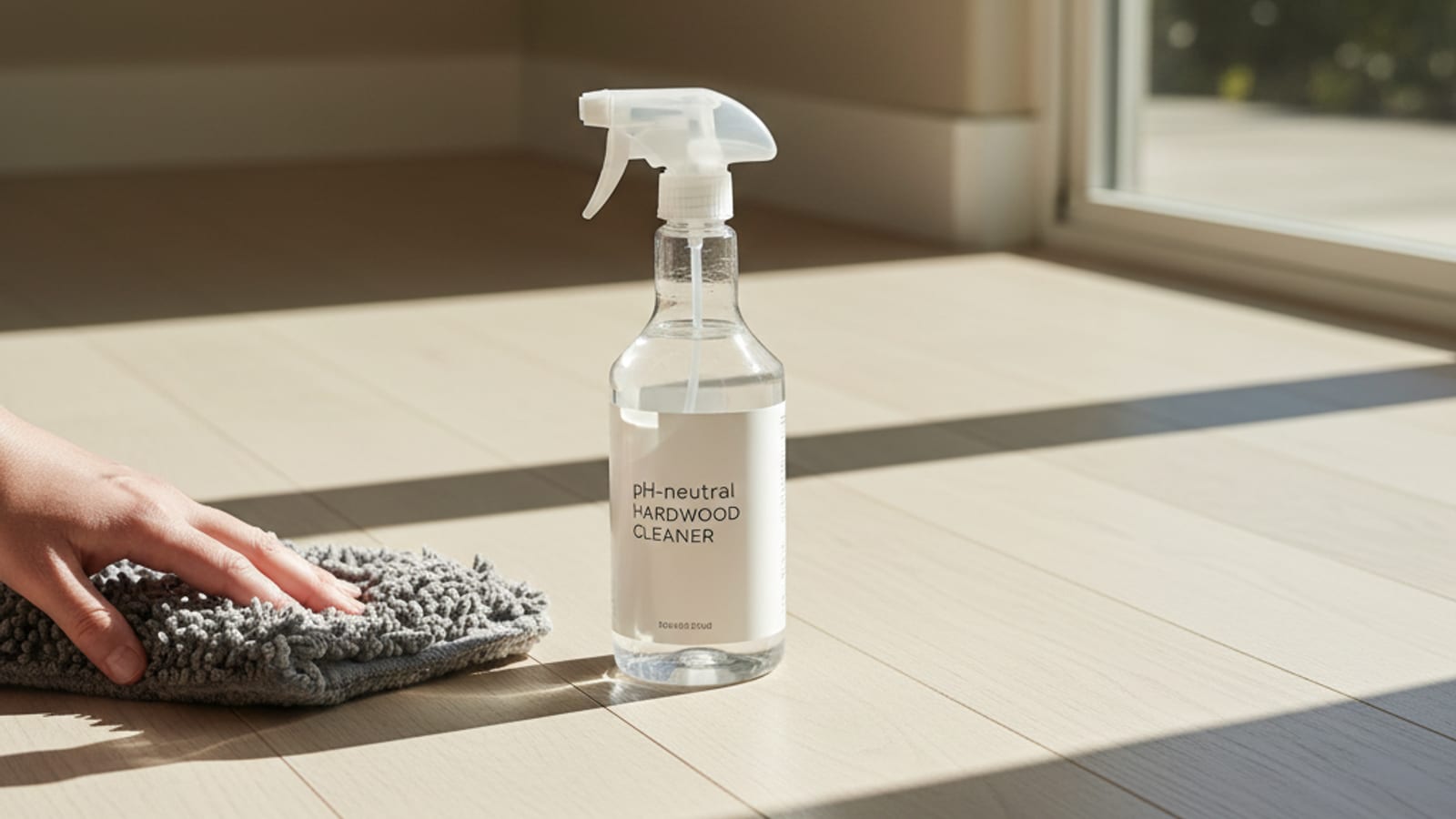
More hardwood finish damage comes from cleaning than from foot traffic. The right method takes 5 minutes.
What you'll learn
- Why a wet mop is the worst thing you can do to hardwood
- The pH-neutral cleaners that match modern waterborne polyurethane
- When to recoat (no full sand) vs. refinish (full sand)
- How to handle pet accidents before they soak through the finish
Step by step
- Sweep or vacuum (hard-floor setting) to lift grit. Grit scratches finish faster than anything else.
- Lightly mist a microfiber pad with a pH-neutral hardwood cleaner, Bona, Method, or similar.
- Mop in the direction of the grain. The pad should leave a damp shine, not standing water.
- For pet accidents: blot immediately, then clean with the same pH-neutral cleaner. Stains that soaked through need spot refinishing.
- Skip vinegar, ammonia, oil soaps, and steam mops. They damage modern polyurethane finishes.
Safety note
Once the finish is dull or scratched through, a recoat (no sanding, just buff and a fresh coat of poly) restores the surface for a fraction of full refinishing cost. We do recoats in a single day.
Rather have a pro handle it?
Free in-home flooring measure across San Diego County. A real flooring pro picks up.
More guides
Keep learning.
Basics · 5 min watch
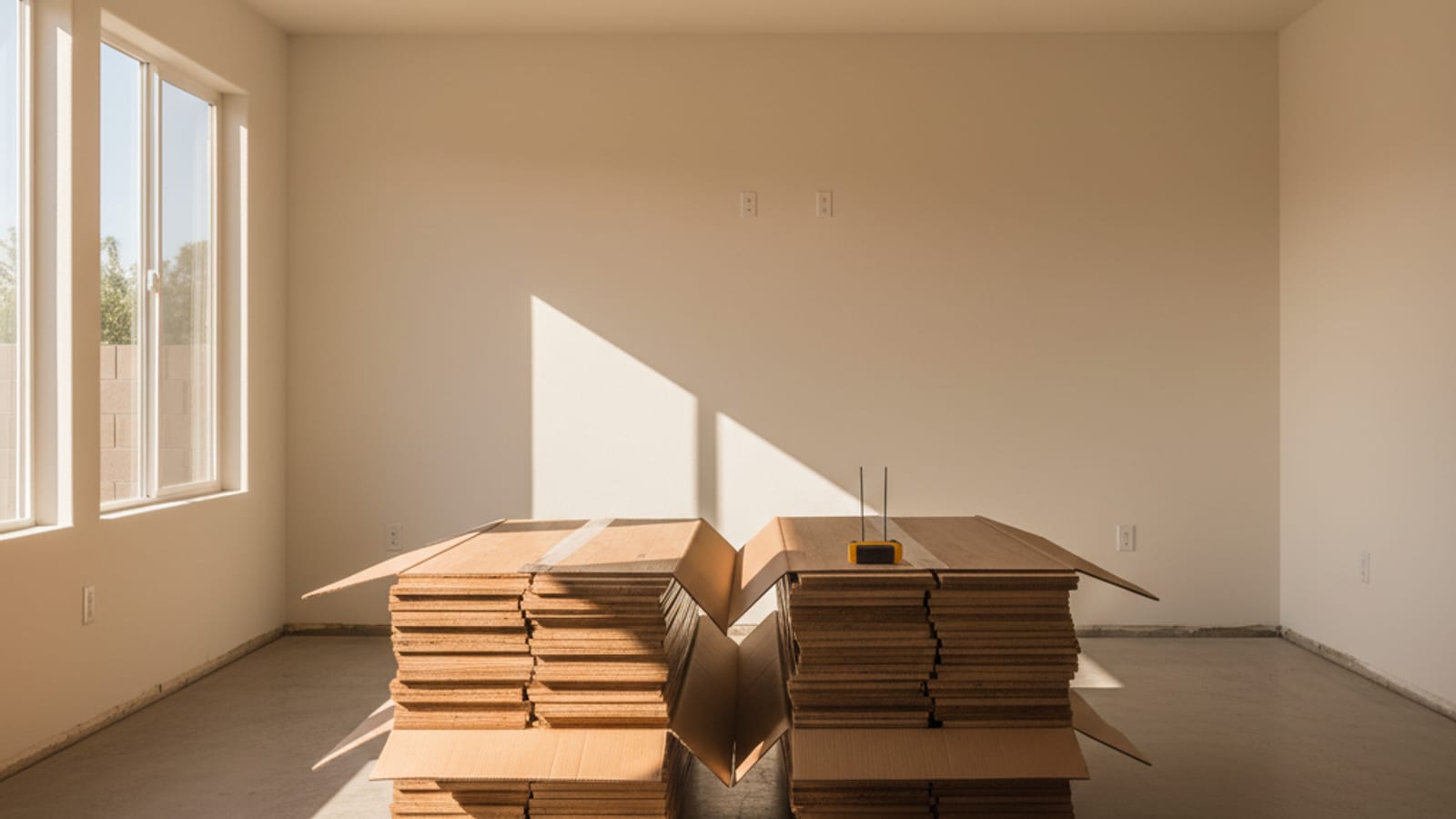
Acclimate hardwood before installation
Most failed hardwood installs come from one mistake: skipping acclimation. Five to ten days on site is non-negotiable.
Basics · 6 min watch
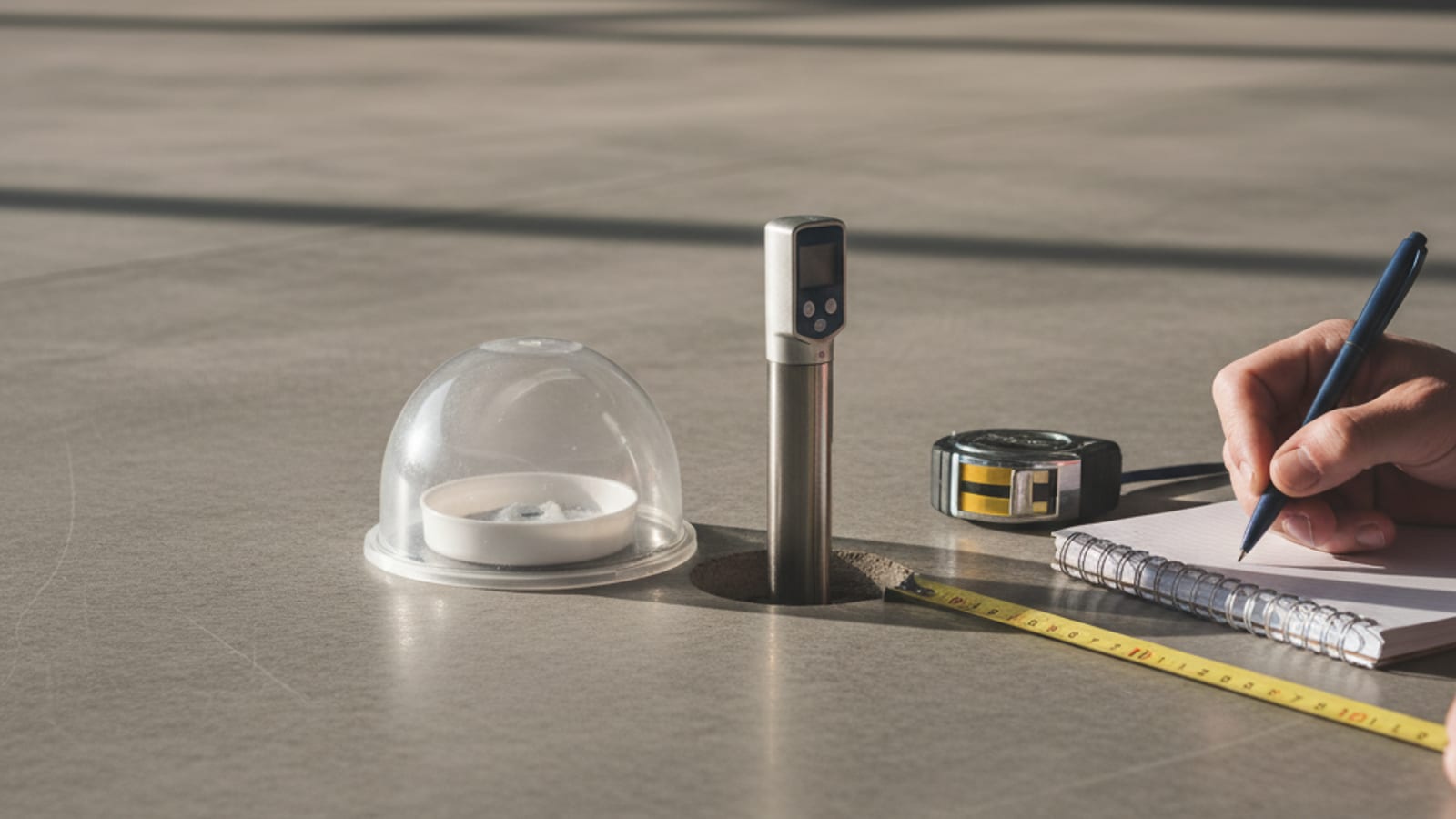
Moisture-test a concrete slab
If you skip slab moisture testing, your floor will tell you about it 6 to 18 months later. Test before you install.
Basics · 7 min watch
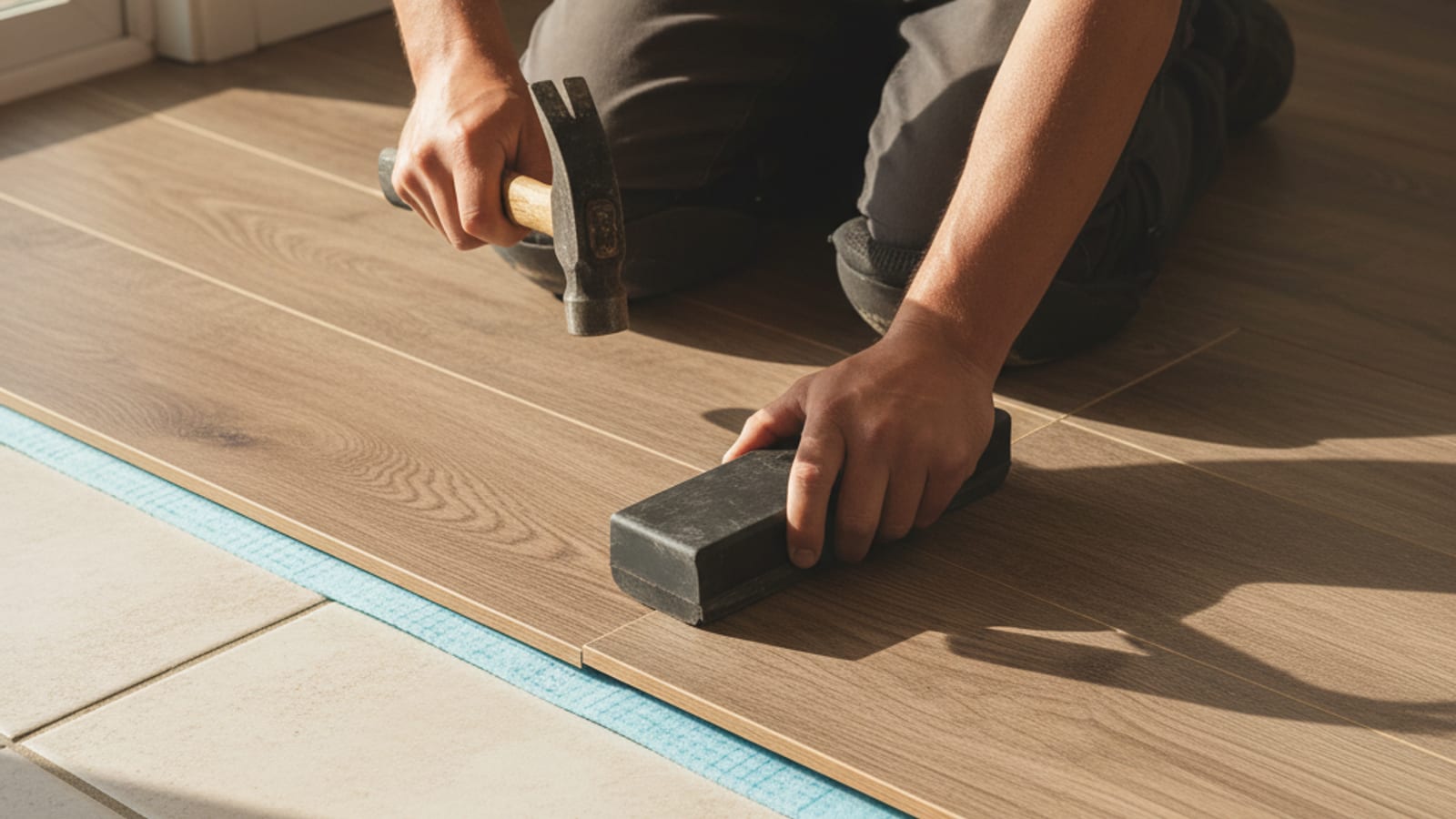
Install LVP over existing tile
Pulling out tile is expensive and messy. If the existing tile is sound, you can usually float LVP right over it.