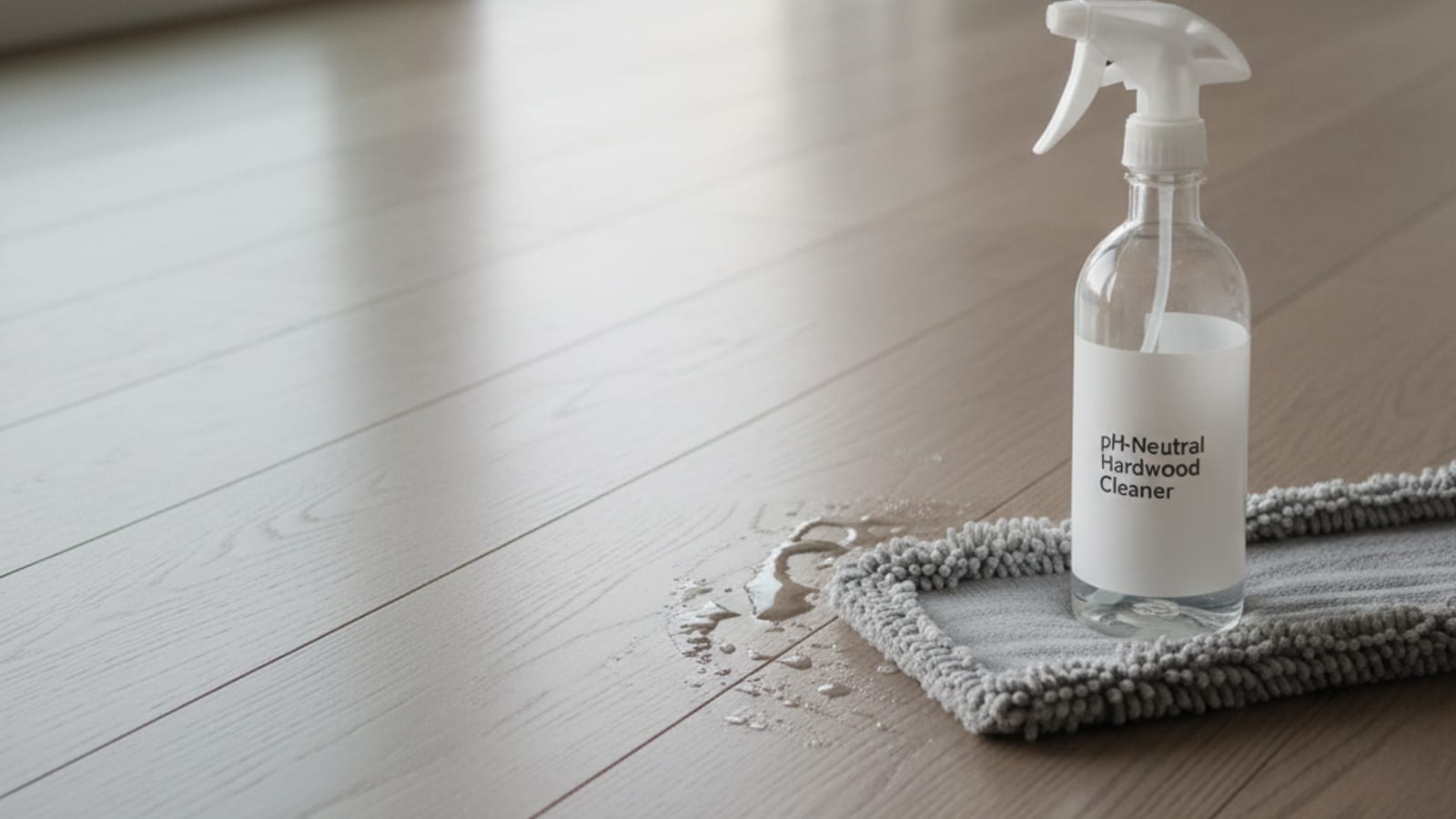
The crews we send refinish a lot of hardwood floors that didn’t need to be refinished. The finish wasn’t worn through from foot traffic, it was damaged by the wrong cleaning method. Here’s how to keep modern waterborne polyurethane looking good for the full 15–20 years it’s designed to last.
The short version
- Sweep or vacuum (hard-floor setting) to lift grit before mopping
- Spray-mist a microfiber pad with pH-neutral hardwood cleaner
- Mop with the grain, leaving a damp shine, not standing water
- Skip vinegar, ammonia, oil soap, and steam mops, all damage modern poly finishes
Why grit matters more than dirt
The single biggest threat to a hardwood finish is grit tracked in from outside. Sand from the beach, dust from East County, dirt from gardening, all act like sandpaper underfoot. A vacuum or broom every couple of days lifts grit before it scratches the finish.
Walk-off mats at every entry catch most of it. A two-foot mat outside and a three-foot mat inside (rubber-backed and breathable) traps 80% of incoming grit.
For pet households, a quick sweep before a damp mop is non-negotiable. Pet hair traps grit; mopping with grit still on the floor pushes it across the surface and creates microscratches faster than foot traffic alone.
What to use for damp cleaning
The right cleaner depends on the finish on your floor:
Waterborne polyurethane (most modern installs): pH-neutral cleaner like Bona Hardwood Floor Cleaner, Method Wood Floor, or Murphy’s Wood Floor Cleaner. Spray-mist a microfiber pad, never the floor directly.
Oil-based polyurethane: Same pH-neutral cleaners as above are safe.
Hardwax oil (Rubio Monocoat, Bona Craft Oil): Use the manufacturer’s recommended cleaner. These finishes need different products and occasional re-oiling.
For all three: spray-mist the pad, not the floor. Mop with the grain. The pad should leave a damp shine that dries within seconds, not standing water that sits.
What to avoid
These cause real, measurable damage to modern hardwood finishes:
Vinegar. Acetic acid etches polyurethane over time, dulling the surface. The “natural cleaning” advice from the early 2000s predates modern poly finishes. Skip it.
Ammonia. Streaks, dulls, and breaks down the urethane bond. No.
Oil soap (Murphy’s original, not the wood-floor version). Builds up a residue that turns hazy and gets harder to remove with time. Some finishes specifically void warranty if oil soap was used.
Steam mops. The combination of heat and forced moisture penetrates seams and damages both the finish and the wood underneath. Permanently. Don’t.
Wet-mopping with a sopping mop. Standing water on hardwood is bad for the finish and worse for the wood. If your pad is dripping, wring it out.
Generic “all-purpose” cleaners. Most are pH-alkaline and damage poly. Stick with cleaners specifically labeled for hardwood.
What about pet accidents?
Three-step protocol for pet accidents on sealed hardwood:
- Blot immediately with a clean towel. Don’t wipe, it spreads. Press and absorb.
- Spray pH-neutral hardwood cleaner on a microfiber pad and clean the area.
- Dry completely with a fresh towel.
If you got to it within a few hours, the finish should hold. If the urine soaked through the finish (yellow or black stains in the wood itself), the boards need to be sanded and re-finished, sometimes board replacement is the cleaner fix.
How often to clean
For most San Diego homes:
- Daily: Walk-off mats at entries do their job
- 2–3 times per week: Sweep or vacuum to lift grit
- Weekly: Damp clean with pH-neutral cleaner
- Monthly: Check for spots that need attention (pet bed areas, kitchen splash zone)
Coastal homes and pet households can lean to the heavier end. Inland low-traffic homes can stretch the damp clean to every two weeks.
When to recoat vs. refinish
If the finish is dull or you can see fine scratches but the wood underneath is still in good shape, a recoat is your friend. Recoat = light buff + one fresh coat of poly. No sanding. Costs roughly half what a full refinish does (~$2.50 to $3.50 per square foot in San Diego), takes one to two days, and restores the surface.
If the wood is scratched through to bare or stained beyond saving, a full refinish is the right call. Sand to bare wood, stain (if changing color), three coats of poly. Three to five days, $4.50 to $7 per square foot.
We measure existing finish thickness at the consult, sometimes the answer is “you don’t need a refinish, you need a recoat” and we’ll tell you that.
What about polyurethane “rejuvenators” or “restorers”?
Bona Polish, Rejuvenate, Quick Shine, etc. These are wax-and-polymer products that lay a temporary shiny film over your existing finish. They look great for two to six weeks. Then they get streaky, hazy, and harder to remove with each application, and they have to be stripped before any future recoat or refinish.
Skip them. A real recoat lasts for years, costs less over time, and doesn’t trap you in a cycle of re-applying the polish every few weeks.
Daily routine that actually works
For a typical 1,500 square foot San Diego home:
- 60-second walk-through with a vacuum (hard-floor setting) every other day
- 5-minute spray-mop with pH-neutral cleaner once a week
- Spot-clean with a slightly damp cloth as needed
That’s it. Modern waterborne polyurethane is durable when you treat it right. Most finish damage comes from over-cleaning with the wrong products, not from under-cleaning.
Need a recoat or refinish?
Free in-home consult across all 67 San Diego County cities. We measure existing finish, check for spots that need attention, and tell you whether a recoat (cheaper, faster) or full refinish is the right call.
Call (858) 925-5546 or request a quote.