Last updated: May 2, 2026
Tile in Oceanside, CA.
Tile flooring for Oceanside homes, done by an experienced San Diego County crew. Tile is unforgiving. A 1/16-inch lippage between two large-format tiles is the difference between a floor that looks custom and a floor that looks rushed.
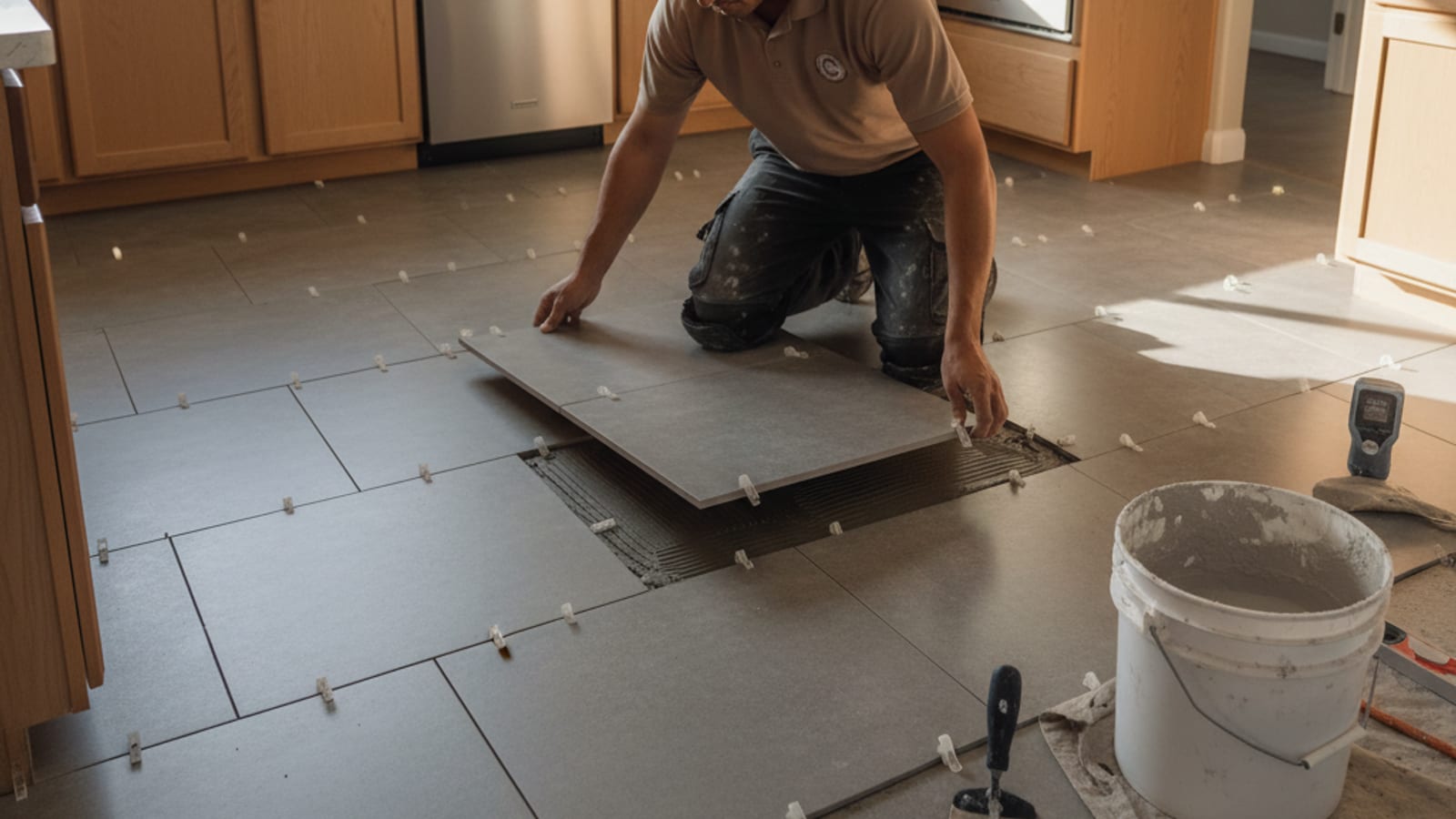
What's included in tile in Oceanside?
- Subfloor prep including cement board, Schluter Ditra, or self-leveling
- Porcelain, ceramic, and natural stone install
- Large-format tile (24x48 and up) with leveling clips
- Mosaic, hex, herringbone, and chevron patterns
- Heated floor (Schluter Ditra-Heat or Suntouch) install
- Custom layout to balance cuts at room edges
- Epoxy or polymer-modified grout, sealed where needed
- Cove base, bullnose, and metal Schluter trim
When does a Oceanside home need tile?
- Bathroom, kitchen, mudroom, or laundry room
- You want heated floors
- You have a Mediterranean, Spanish, or coastal-modern aesthetic
- High-moisture areas where wood and laminate will fail
- You want a 50-year floor that does not need refinishing
What do Oceanside homeowners ask about tile?
How soon can you start tile flooring in Oceanside?
Most Oceanside projects start within one to two weeks of the in-home measure. Water-damaged floors get same-week priority. We bring product samples to your home so you can decide without a showroom trip.
What does tile flooring cost in Oceanside?
Installed from $11 to $20 per sq ft including material. Pricing is the same across San Diego County, with no mileage upcharge for Oceanside. The in-home measure and written quote are free, and every quote is line-itemed for material, labor, demo, prep, and transitions.
How does Oceanside's climate affect this service?
Oceanside is the largest North Coastal city - beach-block rental and military rental stock take heavy turnover, while South O and Fire Mountain run owner-occupied refresh on older tract homes. Rigid-core LVP and porcelain tile dominate both.. We account for local conditions in every job.
Porcelain or ceramic, which is better?
Porcelain is denser, harder, and more water-resistant than ceramic, usually the better pick for floors. Ceramic is fine for walls and lower-traffic floors, and is easier to cut, which can lower labor cost on intricate patterns. For a kitchen or main-traffic floor, porcelain is what we recommend.
Do I need cement board or Schluter Ditra?
Over a wood subfloor, yes. Ceramic and porcelain crack if they flex with the structure. Cement board is the traditional option. Schluter Ditra is an uncoupling membrane that costs more but performs better long-term. Over a sound concrete slab, neither is mandatory, but a crack-isolation membrane is cheap insurance against hairline slab cracks telegraphing through.
Need tile in Oceanside?
Call for a free in-home measure and a line-itemed written quote.