Last updated: May 2, 2026
Subfloor in Oceanside, CA.
Subfloor flooring for Oceanside homes, done by an experienced San Diego County crew. Every flooring failure that's not a manufacturing defect comes from the subfloor. Wet slab.
What's included in subfloor in Oceanside?
- Slab moisture testing (calcium chloride and in-situ probe per ASTM)
- Slab flatness check with 10-foot straightedge
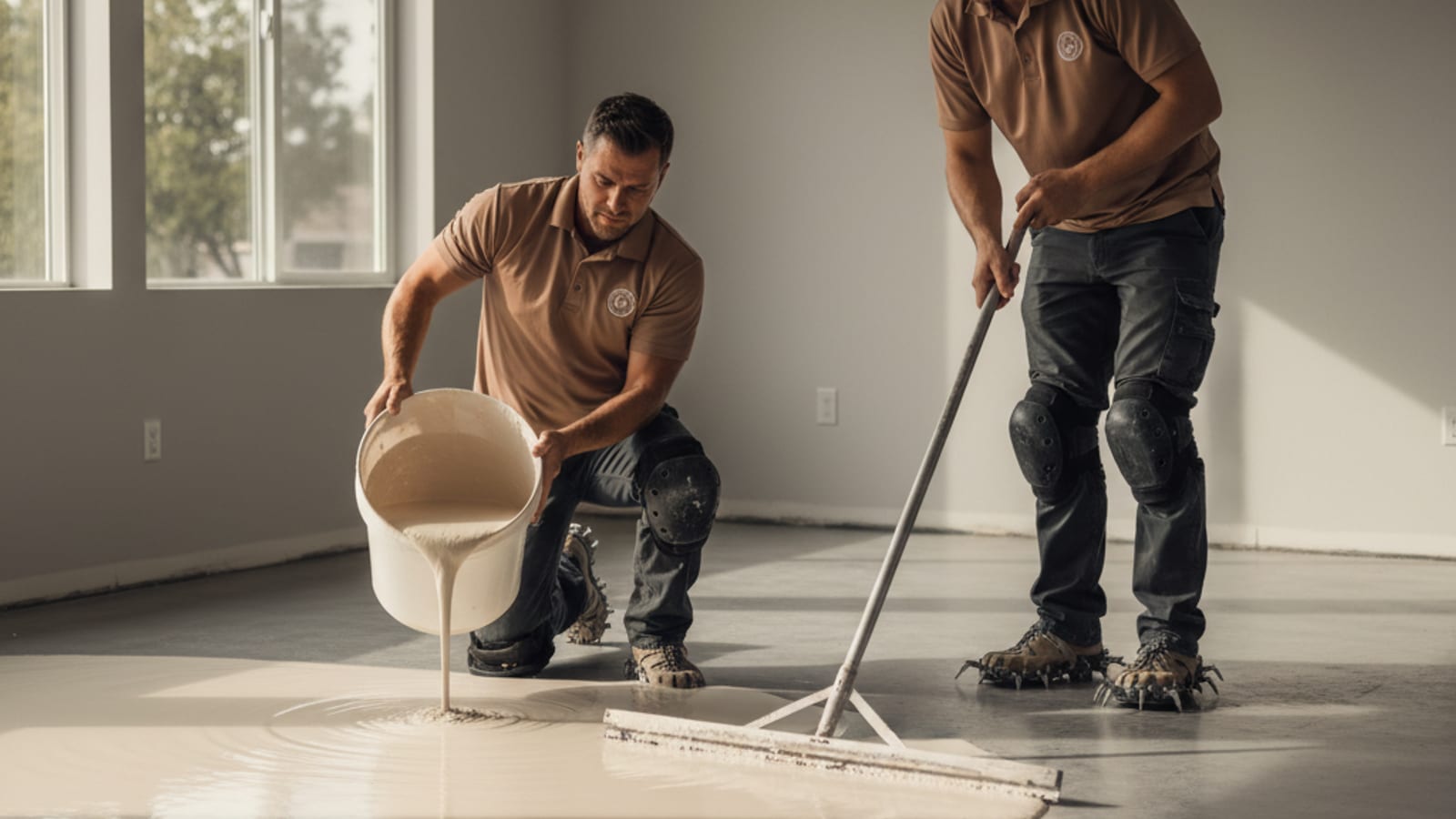
- Self-leveling compound pour for low spots
- Diamond grinding for high spots and bond breakers
- Plywood overlay over uneven slab or wood subfloor
- Moisture mitigation coatings for slabs above spec
- Subfloor screw-down to eliminate squeaks before refloor
- Demolition of old flooring and adhesive removal
When does a Oceanside home need subfloor?
- New floor is being installed and old subfloor is questionable
- There's a hump, a dip, or a soft spot
- Old adhesive (cutback, urethane) is still on the slab
- Slab moisture is high and the new floor will not handle it
- The previous floor failed and you do not know why
What do Oceanside homeowners ask about subfloor?
How soon can you start subfloor flooring in Oceanside?
Most Oceanside projects start within one to two weeks of the in-home measure. Water-damaged floors get same-week priority. We bring product samples to your home so you can decide without a showroom trip.
What does subfloor flooring cost in Oceanside?
Self-leveling from $1.50/sq ft · grinding from $1/sq ft. Pricing is the same across San Diego County, with no mileage upcharge for Oceanside. The in-home measure and written quote are free, and every quote is line-itemed for material, labor, demo, prep, and transitions.
How does Oceanside's climate affect this service?
Oceanside is the largest North Coastal city - beach-block rental and military rental stock take heavy turnover, while South O and Fire Mountain run owner-occupied refresh on older tract homes. Rigid-core LVP and porcelain tile dominate both.. We account for local conditions in every job.
How flat does the subfloor need to be?
Most modern flooring (LVP, laminate, engineered) calls for 3/16 inch in 10 feet. Large-format tile is 1/8 inch in 10 feet. Solid hardwood is 3/16 inch in 6 feet. We measure with a 10-foot straightedge and feeler gauges. Out-of-tolerance areas get self-leveling compound or grinding.
How do you test slab moisture?
Two methods. Calcium chloride (ASTM F1869) measures moisture vapor emission rate over 60 to 72 hours and gives a number in pounds per 1,000 square feet per 24 hours. In-situ relative humidity probe (ASTM F2170) measures moisture inside the slab itself and is more accurate. We default to in-situ probes on slab installs.
Need subfloor in Oceanside?
Call for a free in-home measure and a line-itemed written quote.